Appreciating Snow Retention
by Troy Bishopp
In the words of Forrest Gump; “For no particular reason”, I shut down the computer and went for a winter pasture walk, and kept on walking. . .
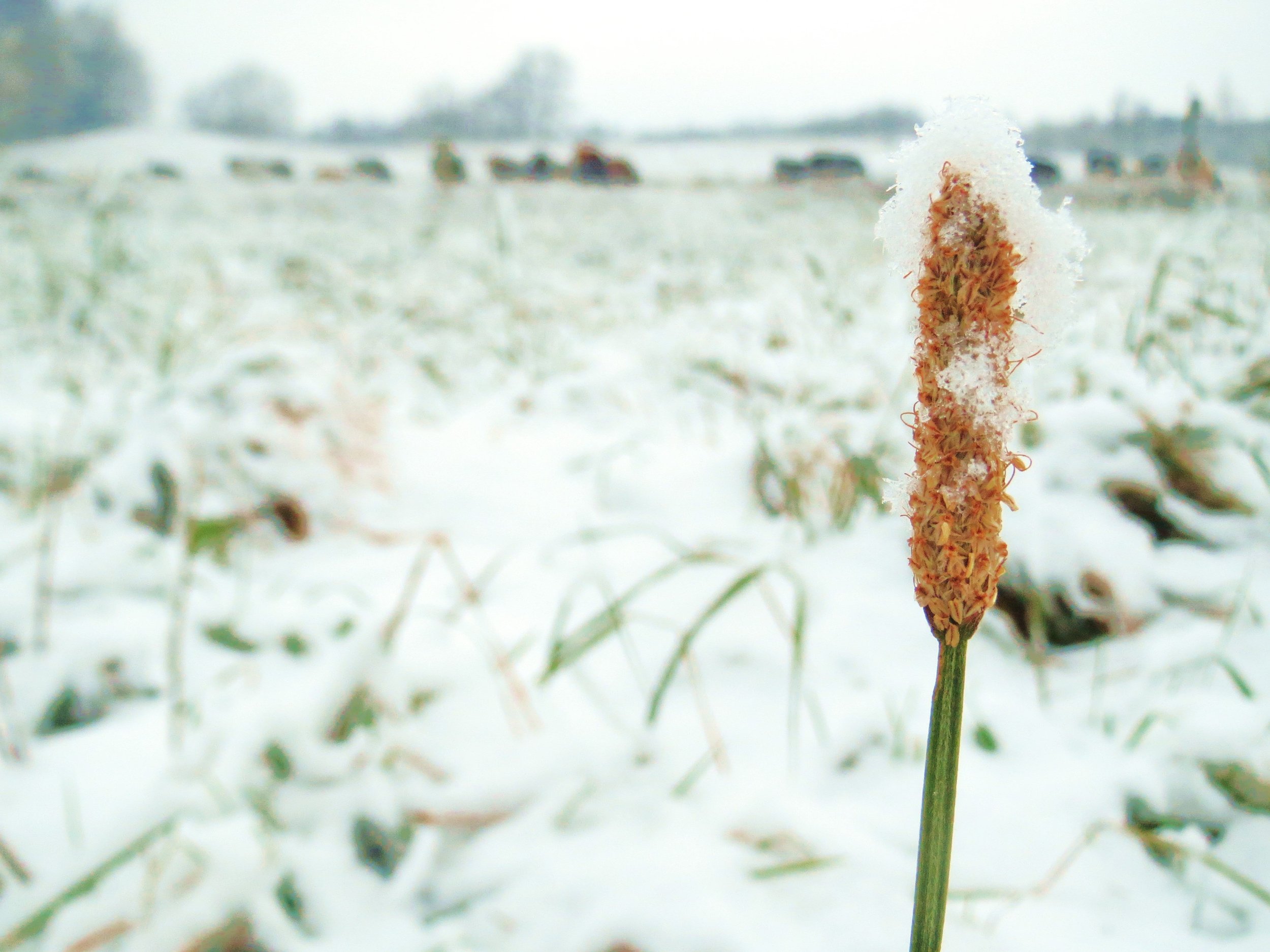
And for no particular reason, I started to look at snow, as frozen water, ready and willing to infiltrate when warming arrives this spring. In areas of the country where water is lacking, capturing this white moisture is a critical element for the tap, habitat or the future growing season.
This journey was on the cusp of an article on my desk: Conservation corridors in the United States: Benefits and planning guidelines by A. C. Henry, Jr., D.A. Hosack, C. W. Johnson, D. Rol, and G. Bentrup. It stated: “The loss of biodiversity has become a national concern. Land use planners are increasingly advocating the use of conservation corridors, including riparian buffers, windbreaks/shelterbelts, filter strips, field borders, and grassed waterways to improve water quality and wildlife habitat”.
For no particular reason, I became aware of my landscape as a net to capture the flakes of opportunity. As I read my land, it was like seeing a sea of fluffy whorls culminating in snow-dunes wherever the wind stopped for a moment and dropped out the life-giving blanket. For no particular reason, I was drawn to structure management and how my ecosystem was functioning.
The first ah-ha moment in snow retention is, even on large open fields, having beneficial grass residuals (and cover crops). Even at a respectable 6 inches, the sward wrestles snow from the cold wind. BTW, this just so happens to be good for plant and soil health. Along the fencelines, my old friend and foe, “Mr. Knapweed”, with its upright florets and tough little trunks, forms a mini snow-fence, sequestering an amazing amount of blowing snow thereby creating a magical igloo for critters and soil microbes.
Upon excavating the snow from under these rudimentary living structures, it was apparent that a lot of activity was going on. Earthworms were still harvesting and leaving their casting call. Mice were busy forming laneways throughout the residual making nests and chomping on stockpiled leaves. Even the pesky deer and rabbits bust into the drift to nip off a couple of nutrient-dense florets. Based on my experience, it won’t be long before their activity attracts the crows, owls, hawks and foxes to become an iced snack.
This winter stroll brought me to my planted shelterbelts of larch, locust, walnut, red maple, conifers, lilac and cranberry shrubs which contribute to snow retention and shelter for livestock. As it grows, the snow collects farther into the field and slowly perks in the ground. This action consistently increases cool season forage production resulting in more grazing days, so it’s more profitable beyond the environmental benefit.
Turns out snow manipulation is also an important fertility improvement tool. In their report: Consequences of manipulated snow cover on soil gaseous emission and N retention in the growing season: a meta-analysis; Researchers Joseph C. Blankinship and Stephen C. Hart suggested that “winter and summer biogeochemistry are intertwined, and decreasing snow cover generally reduces ecosystem N retention. Future changes in snow cover may impact global carbon and N biogeochemistry at the annual scale, likely driven by interactions between climate, latitude, and vegetation type.”
A stop at our farm’s thinking tree feels great in witnessing our riparian corridor trapping many inches of snow in its lowlands. Other than the deer bedding down in the sedges and secret pockets of cattails, it represents a filter, infiltrator and mitigator for an occasional, overzealous farm stream. We describe our pasture system from the highlands to the flood plain as a “wall to wall buffer” working in concert with nature.
Our management and practices are in stark contrast with what is actually happening in our watershed as hedgerows are taken out for more crop farming activities. It’s a shame because the late Jerry Brunetti often referred and advocated for these diverse areas as a farm’s potential “farmacy”. With the recent drought, maybe it’s time to rebrand them into “water/snow collectors” as a way to save or improve these opportunity corridors.
I think it’s time we focus on our land management strategies and snow collection systems as a way to address the grand idea of resiliency. I could see a whole winter educational initiative led by snow retention field days, live flake-landing research cameras, demonstration sites and measuring tools. Of course these activities would have to be coupled with snow fort competitions, sliding parties, roaring fires and lots of hot chocolate to cement the message of environmental fun.
“And that’s all I have to say about that”.