Bale Grazing: Regional Perspectives
Bale Grazing in the Western Region by Kendra Young
The concept of bale grazing utilizes feeding livestock large hay bales in concentrated areas to manage operational concepts such as livestock movement, local soil health, manure management, and even machinery costs. Successful bale grazing in an operation can have numerous impacts such as increasing overall soil health and available nutrients, increasing soil water infiltration rates, and increasing organic matter, among other benefits. Bale grazing can be incorporated into any operation, regardless of size or shape.
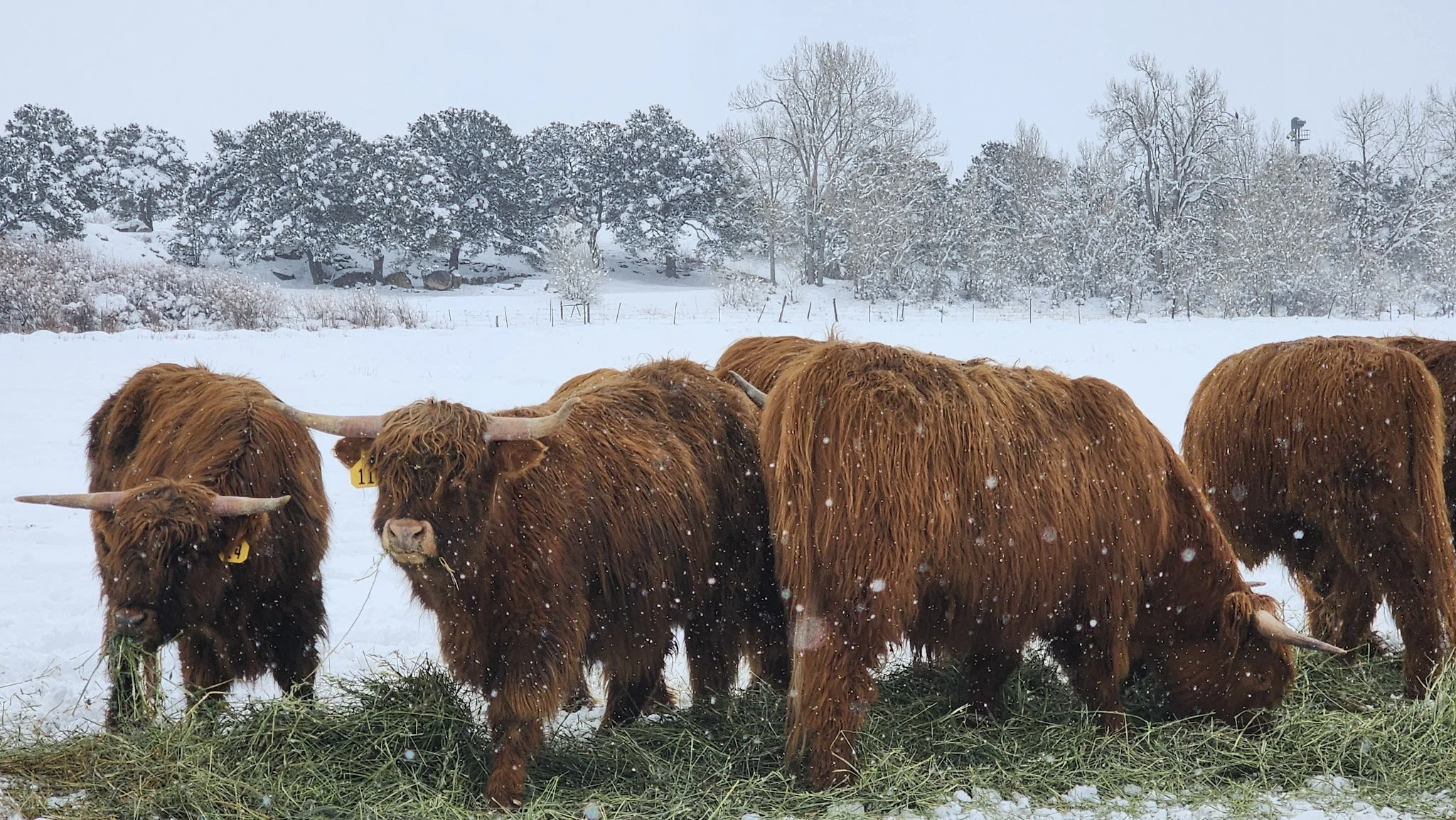
Many ranchers, especially in the Western Region, utilize a form of bale grazing, even if they don’t call it as such. A stereotypical large-scale livestock operation allows animals to graze open lands when forage is available, but turn to supplementing feedstuffs during times of low forage quantity or quality, bcvfg such as the late winter months. During the cold months, when feeding livestock is necessary, many herds are returned to fields and other private lands to await the next summer’s return to grazing allotments. Compared to vast grazing allotments, livestock are highly concentrated in fields during the winter months. Ranchers in this scenario have a built-in foundation for bale-grazing. Ranchers then spread hay in strategic locations to ensure livestock are fed and maintained. Livestock producers also rotate where animals are fed to get the additional benefits of increased natural fertilizer in production fields, increased organic matter and soil health, and to decrease livestock risks such as soil compaction or over-utilization.
While cattle are most commonly thought of when bale grazing, cows are not the only species that can be part of a bale grazing system. Other species such as horses or sheep and goats can be bale grazed for the benefit of the operation. The unique combination of each operation’s livestock species, field size, and the surrounding environment all impact each other and the successfulness of utilizing a bale grazing regime for additional landscape benefits to the operation.
Bale Grazing in the Central Region by Tom Shea
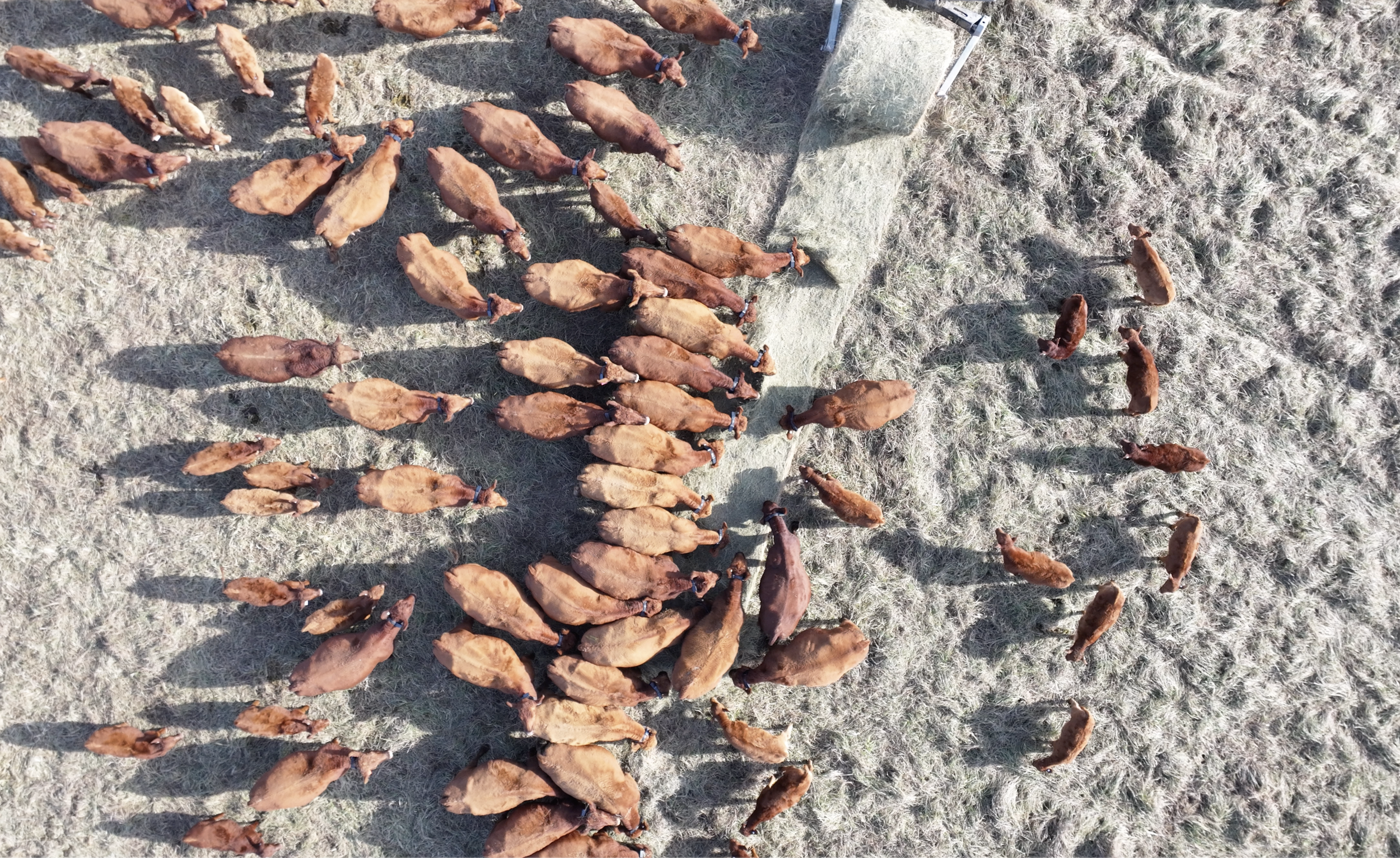
Bale grazing can be effective method in increasing soil fertility while reducing feed costs and fertilizer requirements. Studies have shown that grass yields can increase up to 10 feet away from the center of the bale within 18 months of bale grazing. Bale grazing can be as complicated as you want it to be. On a recent trip to Kansas, I visited a ranch that practices bale grazing by wrapping bales in biodegradable sisal twine, placing them directly in the field, and using virtual collars to graze them throughout the winter. Other ranches and farms haul bales from the field to storage and then to the herd. Often unrolling the bales with a hydraulic bale bed.
Both strategies have merits! If you are trying to improve a separate field from your hay field, hauling bales and unrolling them is an effective way to apply approximately 30 lb. of nitrogen/ ton of hay. Unrolling provides the greatest control over hay distribution and ensures that all heads receive an equal portion simultaneously; however, it requires daily labor and equipment operation. On the flip side, using staged bales eliminates the need for daily equipment use and labor, but is less flexible, especially if you use sisal twine; you typically have less than 30 days to try to move those bales.
Bale grazing offers the unique opportunity to continue implementing soil health practices throughout the winter and to improve soil, rather than using a single sacrifice area during the winter-feeding months, especially in the North Central Regions of the US.
Bale Grazing in the East Region by Troy Bishopp
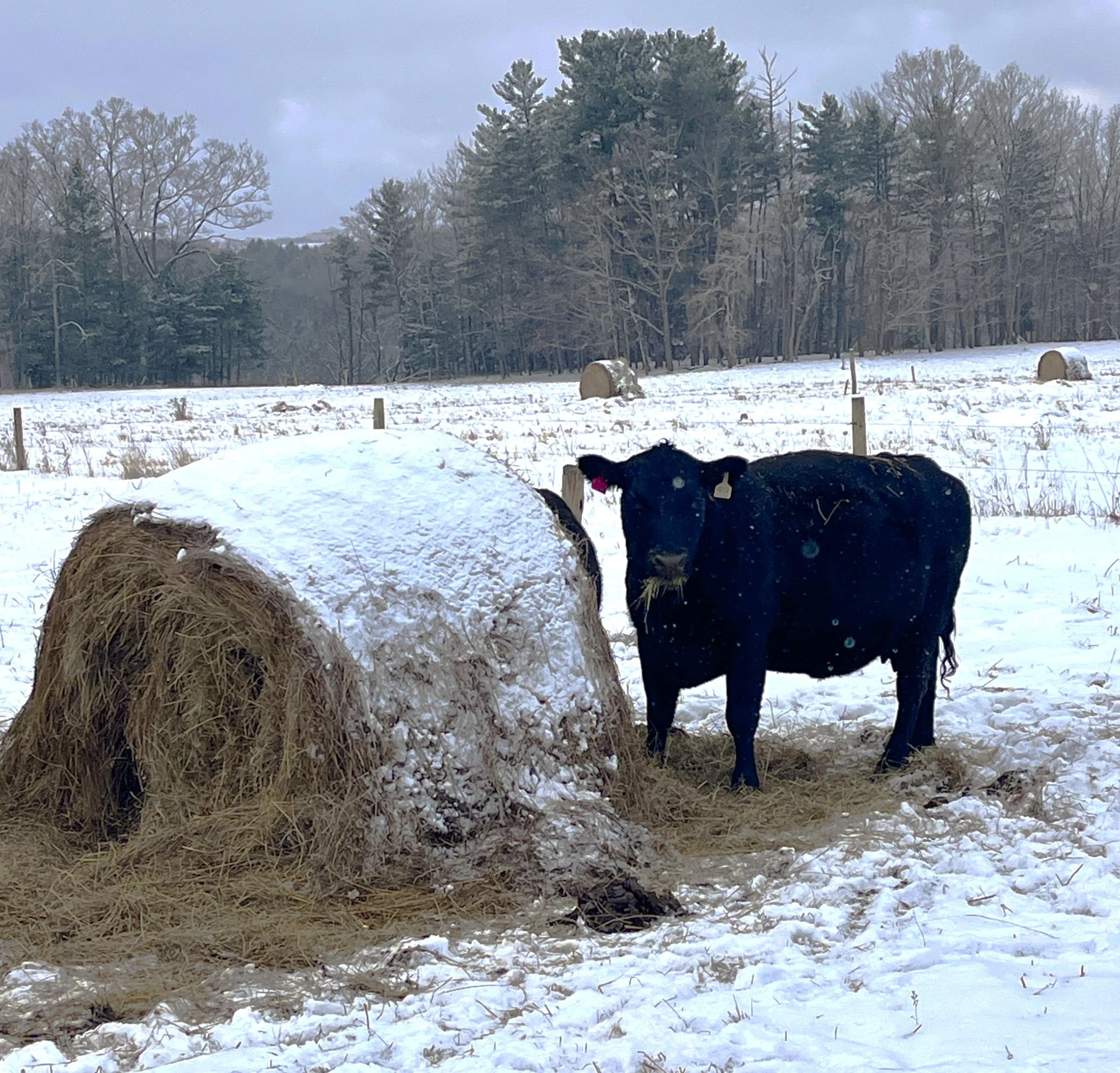
The new practice of bale grazing in the eastern U.S. is as diverse as the topography, proximity to water courses, farm operations (small to large) and context. Most practitioners, of all experience levels, agree that any bale feeding strategy on the land needs to be planned and monitored in concert with the operational goals. Traditionally, it is a snowy region with frozen concrete but has an increasing trend of frost free, cold rain days which challenge animal husbandry measures and welfare concerns and impact soil compaction, mud, nutrient runoff, feed wastage, and economic returns.
The feeding of mostly round bales & baleage on the land is variable. Farms use a pre-placed stationary grid-like pattern with around 2-4 tons of bales/acre. They use bale unrollers and free gravity to spread hay and nutrients out. Some use movable rings or wagons to reduce feed waste. Most farms use a combination of these tools, including heavy use areas, to feed in differing weather conditions. Bale grazing is not just for winter impact, it can be used during droughts or wherever a grazing impact is warranted to improve land by grazing animals.
Bale grazing has been shown to improve fertility, reduce manure management costs, winter labor and fuel needs once you learn it. Bale grazing is a “prime the pump” tool that kick-starts biology and is a long-term strategy of land and forage improvement. It’s a no “one size fits all” strategy. There are lots of different ways to graze bales and different strategies can be employed based on conditions and management capacity. Most farms try it when they see their neighbors doing it or learn from a demo farm or workshop. It’s a lesson in adoption, not agronomy.
The east region is fortunate to have an ongoing national USDA-NRCS CIG Grant by the University of Kentucky Research Foundation. “Bale Grazing: A Practical, Low-Cost, and Environmentally-Sound Management Strategy to Winter Beef Cattle”. Led by Associate Extension Professor in Agricultural Economics at the University of Kentucky, Greg Halich, it partners researchers and farmers from Kentucky, North Carolina, Virginia, West Virginia and New York.
Bale Grazing in the Southeast Region by Chris Workman
Bale grazing is an increasingly valuable management strategy in the Southeast as it aligns well with the region’s mild winters, high biological activity and forage based livestock systems. By bale grazing in pastures and allowing cattle or small ruminants to graze in place, producers can reduce labor, fuel use and equipment wear associated with traditional feeding methods. For both cattle and small ruminants, bale grazing extends the grazing season, improves animal distribution across the pasture and allows producers to utilize lower quality or surplus hay effectively. In the Southeast, where wet soils and winter feeding can cause excessive mud and compaction around hay rings, bale grazing helps spread animal impact over a larger area and minimizes localized damage.
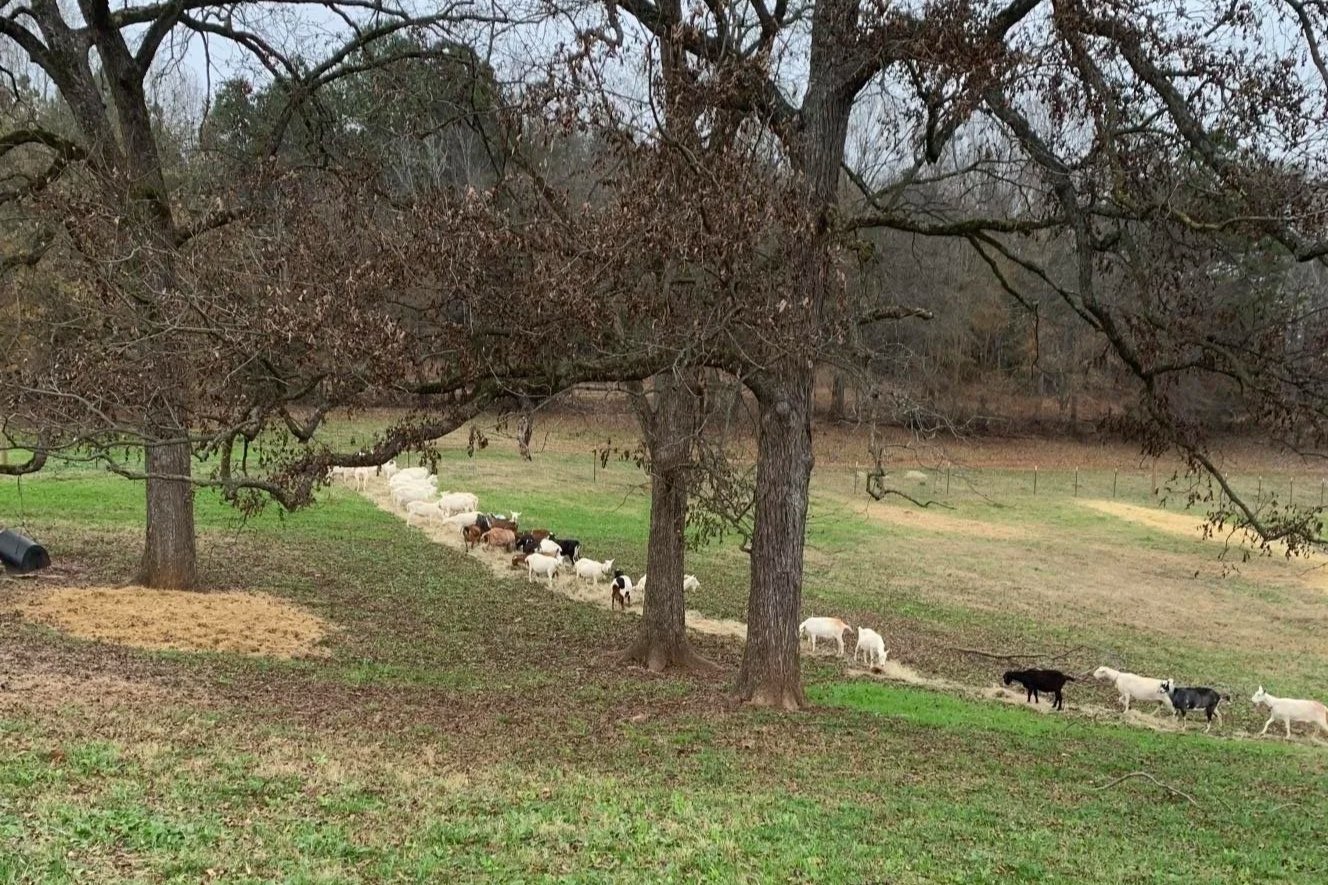
From a soil health perspective, bale grazing directly returns nutrients and organic matter to the land. As animals consume hay, manure, urine and uneaten residue are evenly deposited across the pasture, recycling nitrogen, phosphorus, potassium, and micronutrients back into the soil. This process builds soil organic matter, improves aggregate stability and increases water infiltration (critical benefits in Southeastern soils that often experience intense rainfall events). Over time, these improvements support stronger root systems, better drought resilience and more consistent forage growth, reducing reliance on purchased fertilizer. Bale grazing also supports long term pasture fertility and biological function. The combination of surface residue and hoof action helps protect soil from erosion while stimulating microbial activity and nutrient cycling.
For small ruminants, careful bale placement and timing can also reduce parasite pressure by improving pasture rest and encouraging more uniform grazing patterns. When planned correctly, bale grazing becomes more than a winter feedingstrategy. Bale grazing can be a tool that improves soil function, enhances forage productivity and strengthens the overall resilience and profitability of Southeastern livestock operations. As with any livestock strategy, careful planning can prevent potential health and mud issues while simultaneously increasing soil organic matter.