Agricultural Partnerships and Collaborations
by Kendra Young
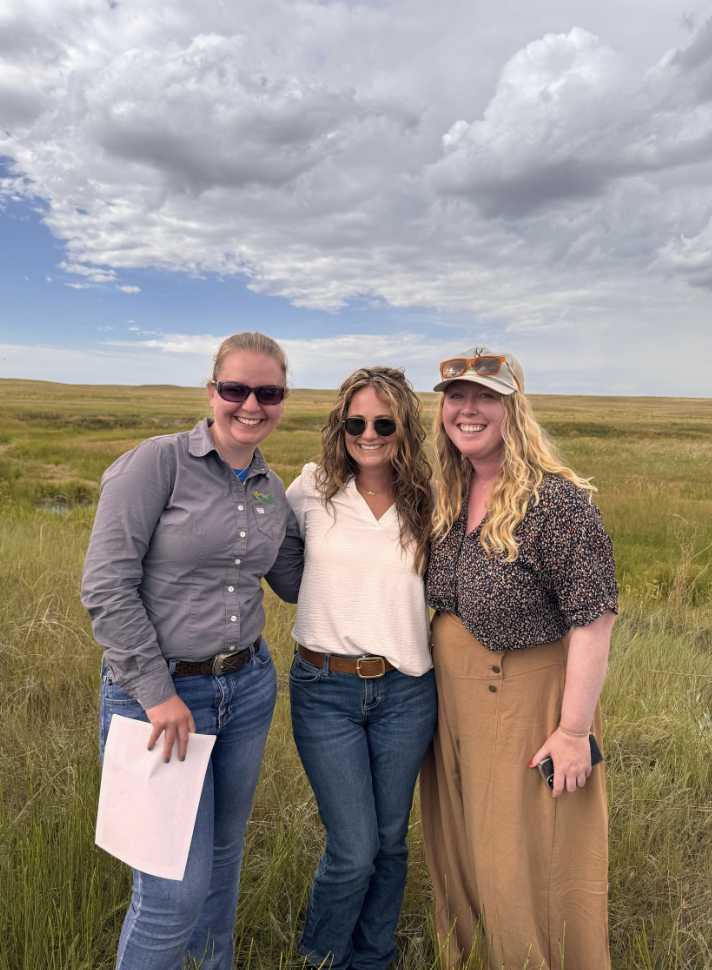
There is an African proverb that states, “If you want to go fast, go alone. If you want to go far, go together.” This is just one of many sayings that highlight the ideal working conditions available in a group setting that can launch a collaborative effort farther than an individual acting alone. While one person might have many strengths, a group is a built-in support network that includes the combined strengths of many. This group effort can build a stronger foundation for the project and increase its final success rate.
Many agricultural and resource organizations utilize a partnership approach to conservation work. Some programs’ collaborative efforts are built to ensure all demographics are represented, or overarching ecosystem goals are met. A specific example of this is a “Coordinated Resource Management Plan” used by conservation districts. In this example, a project may involve a common landowner and several conservation partners that share the belief that conservation of resources should not stop in an entire landscape just because a fence line was encountered. A second example of an agricultural partnership is the interaction with the plethora of agribusinesses and members of the (agriculture) support industry. A farmer or rancher can view their relationship with their county extension agent, their feed ration creator, or their seed salesman as a working partnership – a relationship that benefits both parties. There is not one set definition of what a working partnership or collaborative effort must be or must include. Every operation, organization and opportunity is unique.
The National Grazing Lands Coalition also employs a working partnership and collaborative effort model to boost program efficiency and maximize efforts in our mission to assist grazing lands and those who use them across the nation. One such program, that NatGLC is a part of, is the High Plains REPI (Readiness and Environmental Protection Integration) project. In short, a REPI program is a Department of War funding opportunity that works with other partners and focuses on environmental conservation efforts around a select military installation. The High Plains REPI project specifically focuses on agricultural lands in northeastern Colorado, southeastern Wyoming, and western Nebraska. The High Plains REPI project employs a multi-phase approach to assist landowners in this region, including educational and outreach opportunities and events, on-the-ground producer payments using pilot projects, and potential conservation easements. A group of partner organizations are engaged in delivering the High Plains REPI program across this landscape.
A group of six organizations are engaged in delivering the High Plains REPI program across this landscape including;: The Nature Conservancy, the National Grazing Lands Coalition, Colorado Cattlemen’s Agricultural Land Trust, Wyoming Stock Growers Land Trust, the Nebraska Land Trust, and the Nebraska Grazing Lands Coalition. Each specific partner brings a unique set of knowledge and experiences to the overall project. Primarily, The Nature Conservancy and the National Grazing Lands Coalition focus on administration and coordination efforts, while assisting with multi-state events and projects. The Nebraska Grazing Lands Coalition is an amazing education and events resource for producers in the state of Nebraska. And the three state land trusts (Colorado Cattlemen’s Agricultural Land Trust, the Nebraska Land Trust, and Wyoming Stock Growers Land Trust) are working within their respective states with landowners within the project’s geographical area of interest with information and next steps for those landowners interested in agricultural easements. Utilizing each partner organization’s skill sets, existing networks with their respective areas and states, and organization-specific duties has allowed the High Plains REPI program to focus on several different types of projects, many concurrently, to assist agricultural producers and further the High Plains REPI program in the northern Great Plains region.
In summary, a partnership or a collaborative effort does not need to be overly formal, have a set definition or contain a rigid structure, or include a set number of operating team members. It can be as large, small, structured, or laid-back as necessary to fit the needs of the program or the group’s project. The only set specification of a successful partnership should be all of a group of collaborators (individuals or entities) contributing to the effort and working towards the group’s common goal (or goals). Members of the agricultural industry have a unique advantage when working with partnerships or in collaboration with others. There are countless opportunities in this realm. A partnership can include producer to producer (peer to peer networking) information and resource sharing, producer and industry business opportunities, educational prospects, conservation goals, financial ventures…. Or any other of numerous relationships and opportunities. The possibilities are endless when the group works together to promote success within the industry and rise to a shared accomplishment of reaching a greater good.
For more information on the general R.E.P.I. program, visit Readiness and Environmental Protection Integration, U.S. Department of Defense.
For more information specific to the High Plains REPI program, visit REPI — NatGLC.