Connection is Health: Lessons from the Pasture
by Troy Bishopp
Lindley, NY—Wendell Berry argued that “true health is not complicated or exclusive; it comes from recognizing how everyday actions link together”. He poignantly added, “Only by restoring the broken connections can we be healed. Connection is health”.
His sentiment of connection inspired the 50 farmers, subject matter mentors, and conservation partners who attended the sold-out National Grazing Lands Coalition (NatGLC) Northeast Ultimate 2-day Grazing School hosted by the Burns Family at Evermore Farms in Lindley, New York, on the NY-PA border. This fully in-field event focused on learning from the land, plants, animals, and practitioner experiences as grazing management practices are applied. Host farmer John Burns shared this knowledge in his family’s context of “working in nature’s image and not against it”.
Billed as an observational learning experience, it didn’t disappoint the audience from Oklahoma, Pennsylvania, New York, Vermont, Connecticut, and Canada.
Since March, Burns and Northeast NatGLC Regional Manager Troy Bishopp have been keeping grazing records, watching the weather, planning grazing impact techniques, running over-seeding trials, and grazing silvopasture areas that would visibly highlight before-and-after results in September, so farmers could evaluate impacts with their own eyes.
The strategy also called for establishing a pasture walk trail each day, where a dynamic, regional team of experienced mentors could highlight “stations of learning” along the way, targeting specific topics to engage deeper thinking, build relationships, and stimulate conversations from attendees within their own context. The goal was to share knowledge and build operational resilience through people’s lived experiences.
On day one, Quebec, Canada grass farmer & “Radical Grazier”, Brian Maloney started the event with his rousing, signature “people mimicking animal behavior” exercise where he assessed flight zones, interest in becoming a herd, and gauged attendees’ energy levels while inviting them to take off their footwear and perform “grounding” with the land anytime they felt stress. There weren’t enough “Oooos in Woo” to describe his exemplary howl as he energized the day of learning and contributed his 40 years of grazing experience to the program.
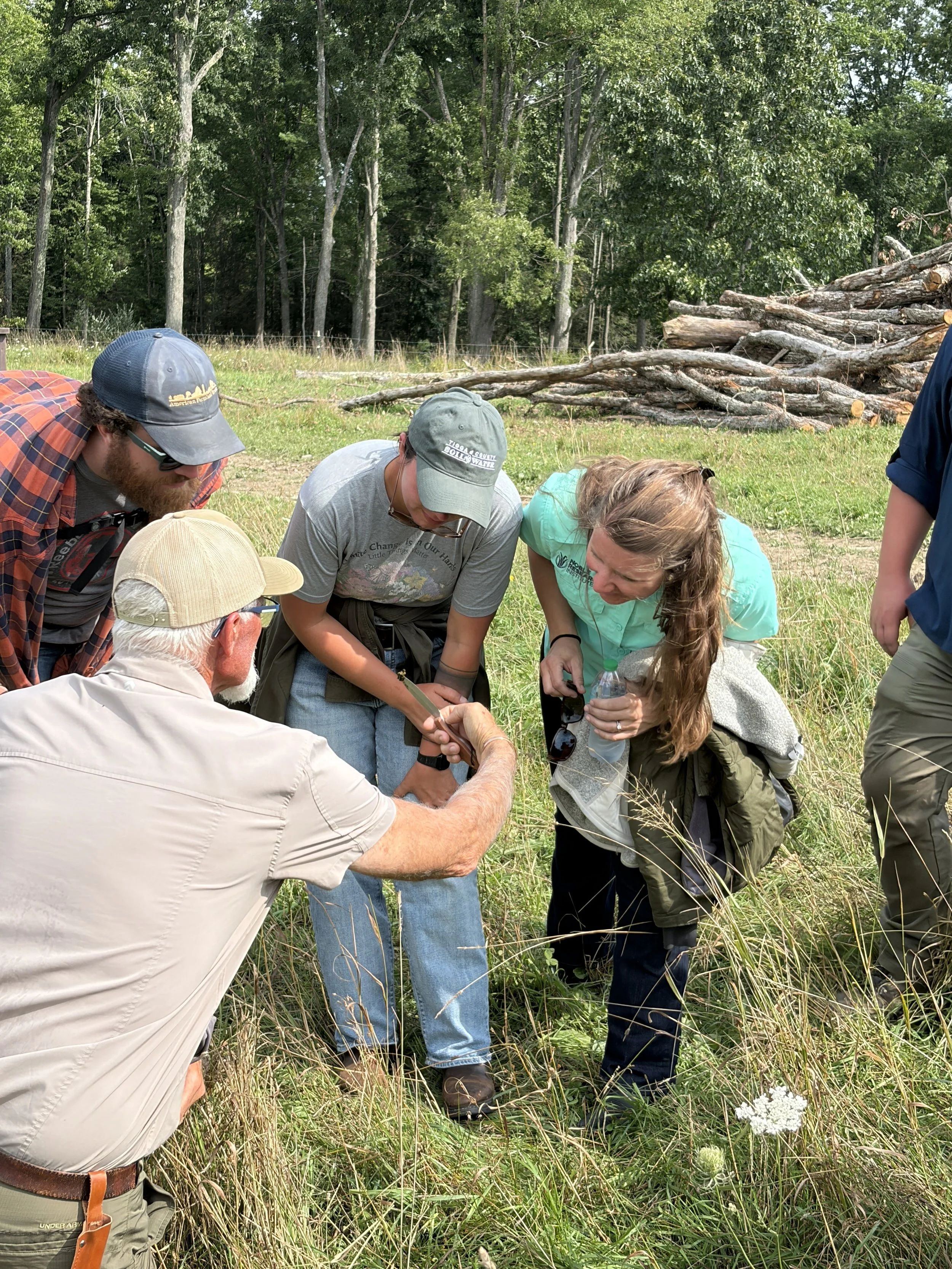
Brian Maloney and a small group of course attendees observing dung beetles.
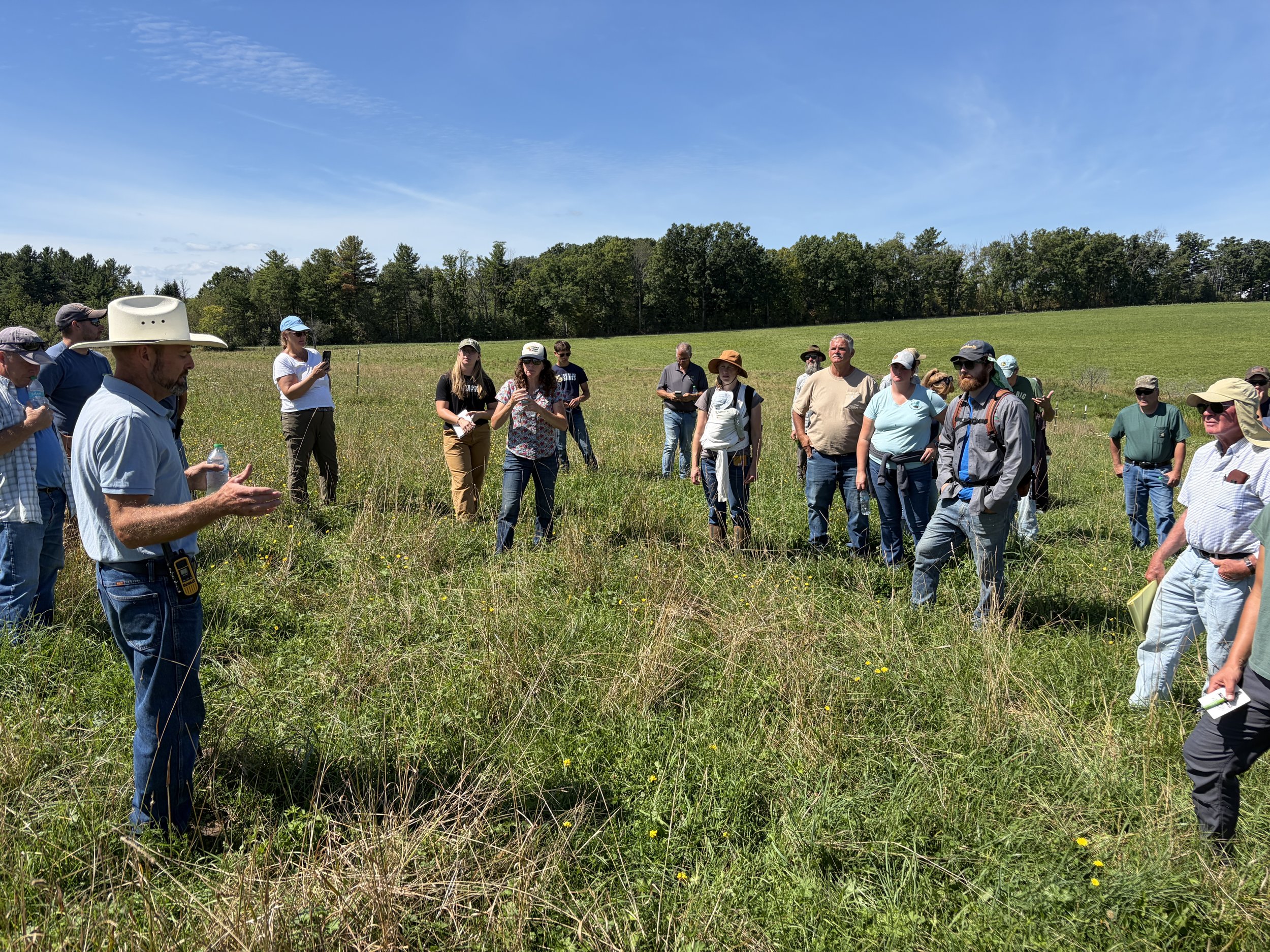
John Burns (pictured on the left) presenting to course attendees.
The walking classroom was a journey in the art of segue, as the large group would be asked to examine a subject at each station. John Burns really brought his context and experience to bear in describing how he grazes his “Flerd” (cattle and sheep together) that yields over 325 days of grazing using planned grazing impacts, recovery periods, hay harvest, stockpiled forage and silvopasture areas to grow pastured protein for consumers. He pointed out his 3 tenets for successful grazing: “Don’t take more than half the pasture mass, leave before it starts to regrow and don’t return till the sward is fully recovered and more.”
Cheryl Bruce, Senior Consultant with Agricultural Consulting Services (ACS) in Vermont was the resident “plant whisperer” as she helped the group identify common and diverse pasture species at every station, and their nutritional attributes for livestock, while highlighting examples of how diverse roots contribute to soil health.
There were stops that looked at how “grass grows grass”, the efficiency of the pasture solar panel to collect photosynthesis, measuring grazing residual heights & frequency and how that affects grass growth rates and using monitoring tools in determining forage production per acre. Folks also received practical training on managing paddock shapes with portable fencing to get a predictable grazing impact outcome using grazing behavior.
Each day the large contingent ate a local lunch with all the fixings provided by the Addison Church Community at the Burns’ family pond where they had ample time to relax, network and form lasting relationships during the event.
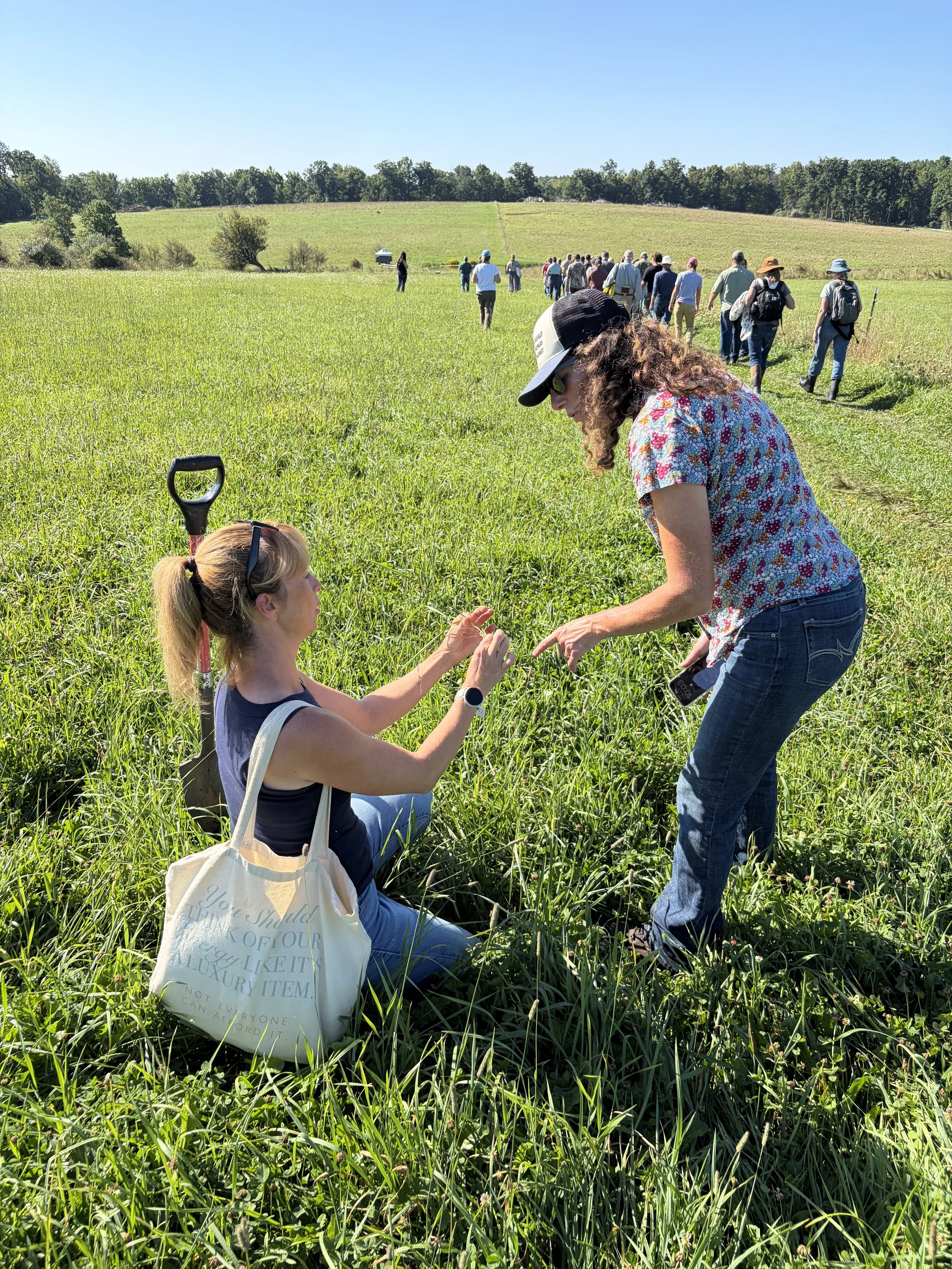
Cheryl Bruce taking a moment to identify a plant with an attendee.
Day one continued on its learning trajectory looking at bale-grazing results from last winter and a 500,000 lbs./acre stock density experiment where Burns moved the “flerd” 14 times in a day. The results in forage production were astounding and as Betsy Hicks, beef farmer and Regional Dairy Specialist for Cornel Cooperative Extension found out, the brix level in the plants was 4 points higher than any other sward on the farm.
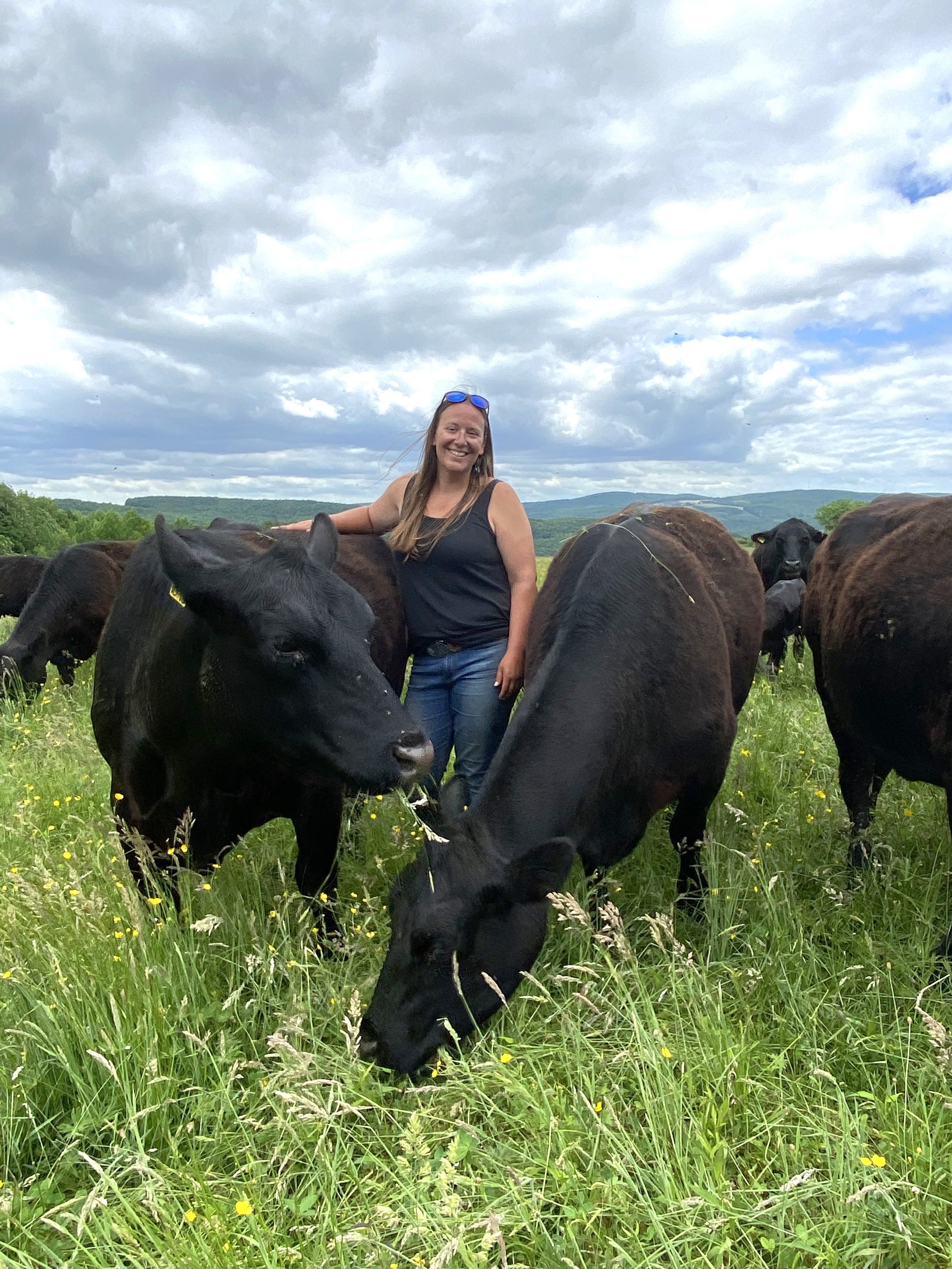
Betsy Hicks with happy cows.
She also guided practitioners on how to judge body condition and look for the “triangle of death”, which refers to the hollow depression on the cow's left flank, just in front of the hip, that is used by farmers to visually gauge rumen fill, health, and contentment, as the animals moved into a new paddock. That new paddock size was measured and allocated by the 50 “grazing specialists”, as the last exercise of the day to be judged on day two by Professor Burns on how well the group paid attention to a full day of developing their “graziers eye”.
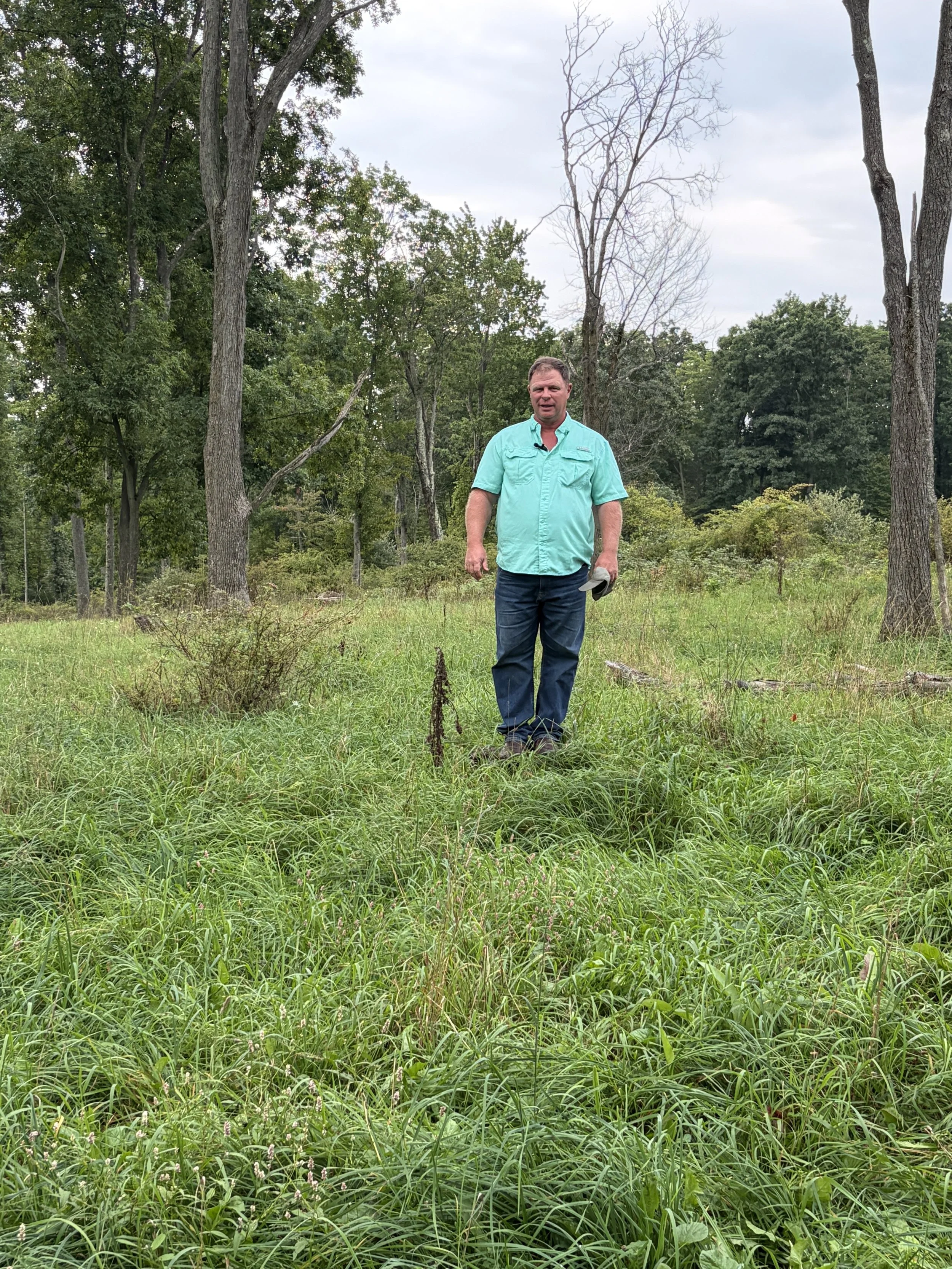
Brett Chedzoy, Regional Extension Forester with Cornell Cooperative Extension
Day two started with another round of field coffee and homemade Burns’ family pastries with the first stops highlighting the nuances of stockpiling forage for winter grazing and a site visit to an in-pasture tree planting area with narration by Joshua Greene, from Trees for Graziers on what species work well and how they protect them with 6’ tubes and an electrified "highline" wire from tree to tree above livestock height, with wrappedindividual wires around tree tubes.
The wagon train stopped in the extensive 60-acre silvopasture area that was strategically harvested to provide forage growing conditions under the dabbled canopy for the “flerd”. This was of high interest to the group as John and Brett Chedzoy, Regional Extension Forester with Cornell Cooperative Extension explained the many facets and financial considerations in doing the management-intensive practice. The value to the story was actually seeing the lush grass between the trees and being able to ask pertinent questions of how to achieve a positive result. As an added bonus, John detailed using the harvested slash, to produce his on-farm, “big box” biochar for his bedding pack and fertilizing his fields.
A highlight of the afternoon was using sensory skills to touch the soil. “Soil” Joe Amsili, Director of the New York Soil Health Program at Cornell University, and Dan Ufnar, New York’s State Soil Scientist for USDA-NRCS, led this activity. Practitioners got to “go below ground” to examine how the pasture root systems under two grazing strategies interacted with the “Volusia” soil profile. The group shared strategies to mitigate soil compaction, learned to use farmer-friendly tools to monitor water infiltration rates, and discussed using soil health testing to monitor fields and make informed decisions.
John took the group on a walk through his emerging winter grazing area where he is experimenting with growing bamboo and honey locust, using the tree fodder to feed the sheep for 30 days. Although it’s a slow establishment period, he hopes his long-term investment pays off. At the bottom of the fallowed ground, he performed an over-seeding trial using 130,000lbs/acre of animal impact and Ray’s Crazy Mix from Kings Agriseeds to bolster diverse growth for next year.
The final experiment was to evaluate the group’s decision to allocate enough forage to feed the “flerd” while leaving enough residual to grow the next plants before frost. John was happy with their conservative approach that leaving grass behind is not a waste and adds to the resilience of the year-round grazing context. The grazing family got an A+.
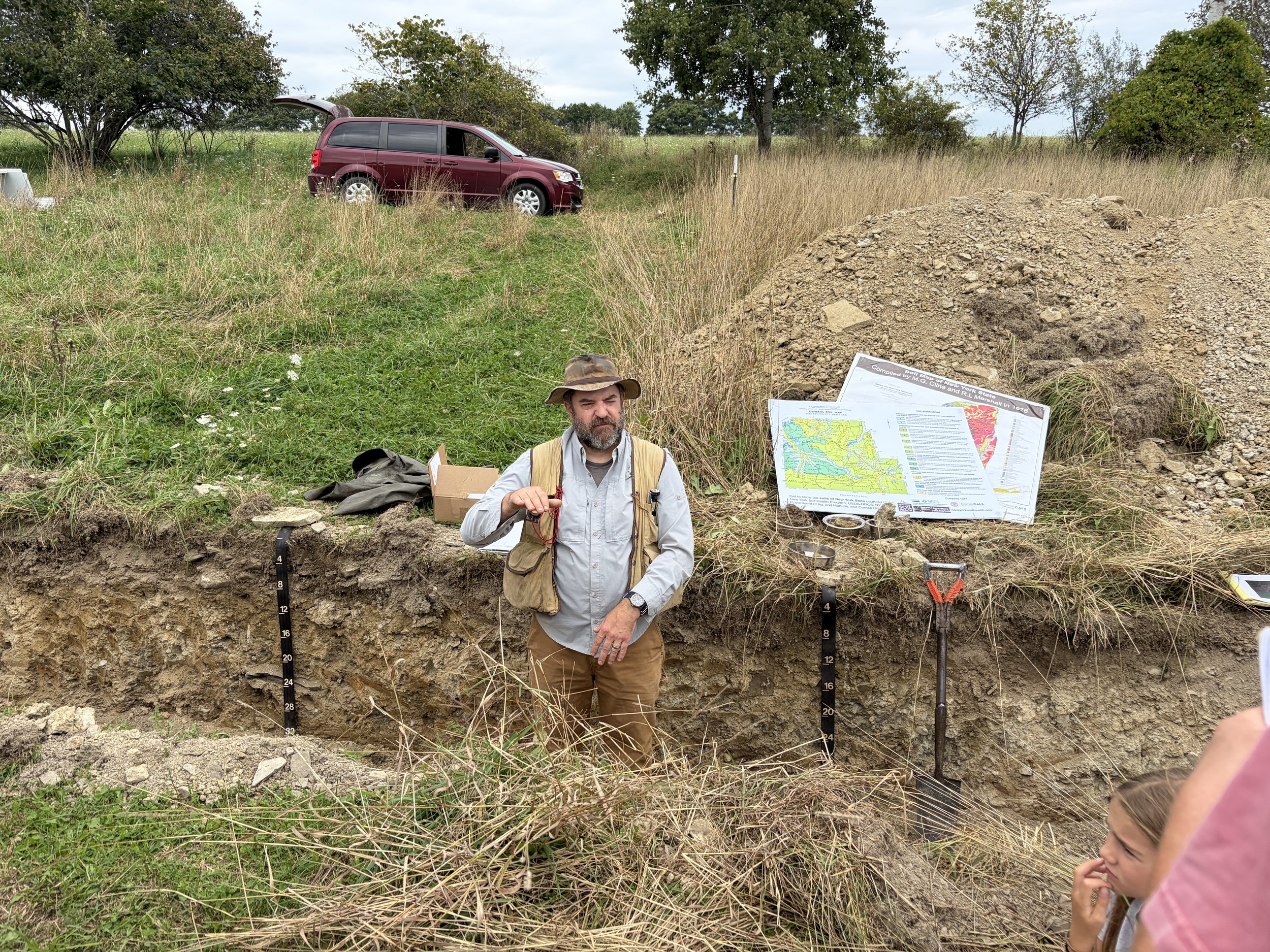
Dan Ufnar, New York’s State Soil Scientist for USDA-NRCS
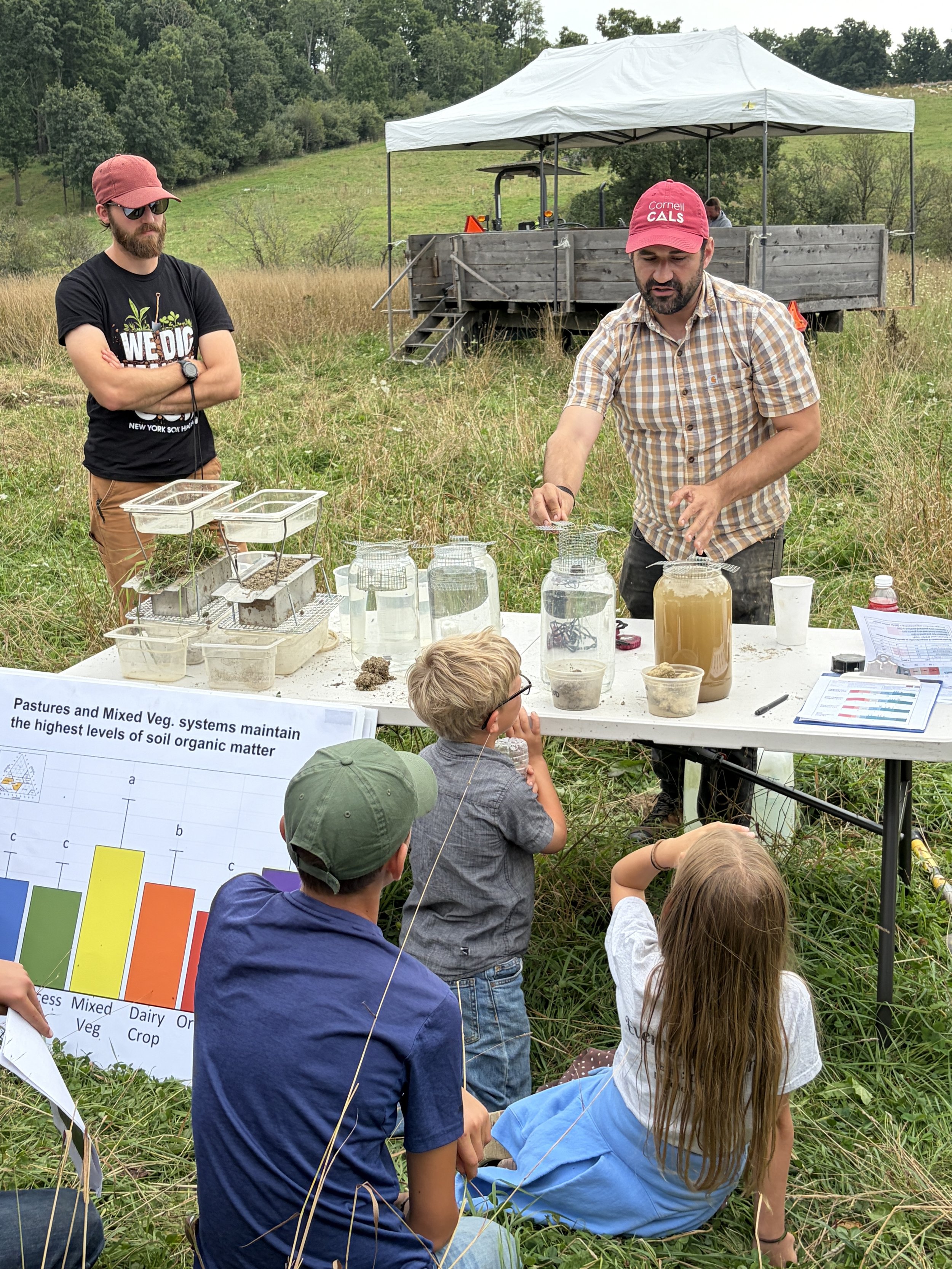
“Soil” Joe Amsili, Director of the New York Soil Health Program based at Cornell University
Did the observationally focused, in-field, peer-to-peer grazing school pass the test? Surveys said, “The family atmosphere was a fulfilling experience,” “very practical,” and a “great way to connect with other practitioners to see before and after effects of grazing practices.” “It was inspiring to hear from some of the sharpest, intellectual minds in the field, thank you”, Jeff BeGell.
The school wouldn’t have been possible without the support from the Farm Credit Northeast AgEnhancement Program, NatGLC, Evermore Farms, The NY Soil Health Program, The Upper Susquehanna Coalition, Trees for Graziers, Kings Agriseeds, Country Folks Newspaper, Agricultural Consulting Services, NY-NRCS, Cornell Cooperative Extension, Vermont Grass Farmers Association, and Ferme Brylee from Quebec, Canada.
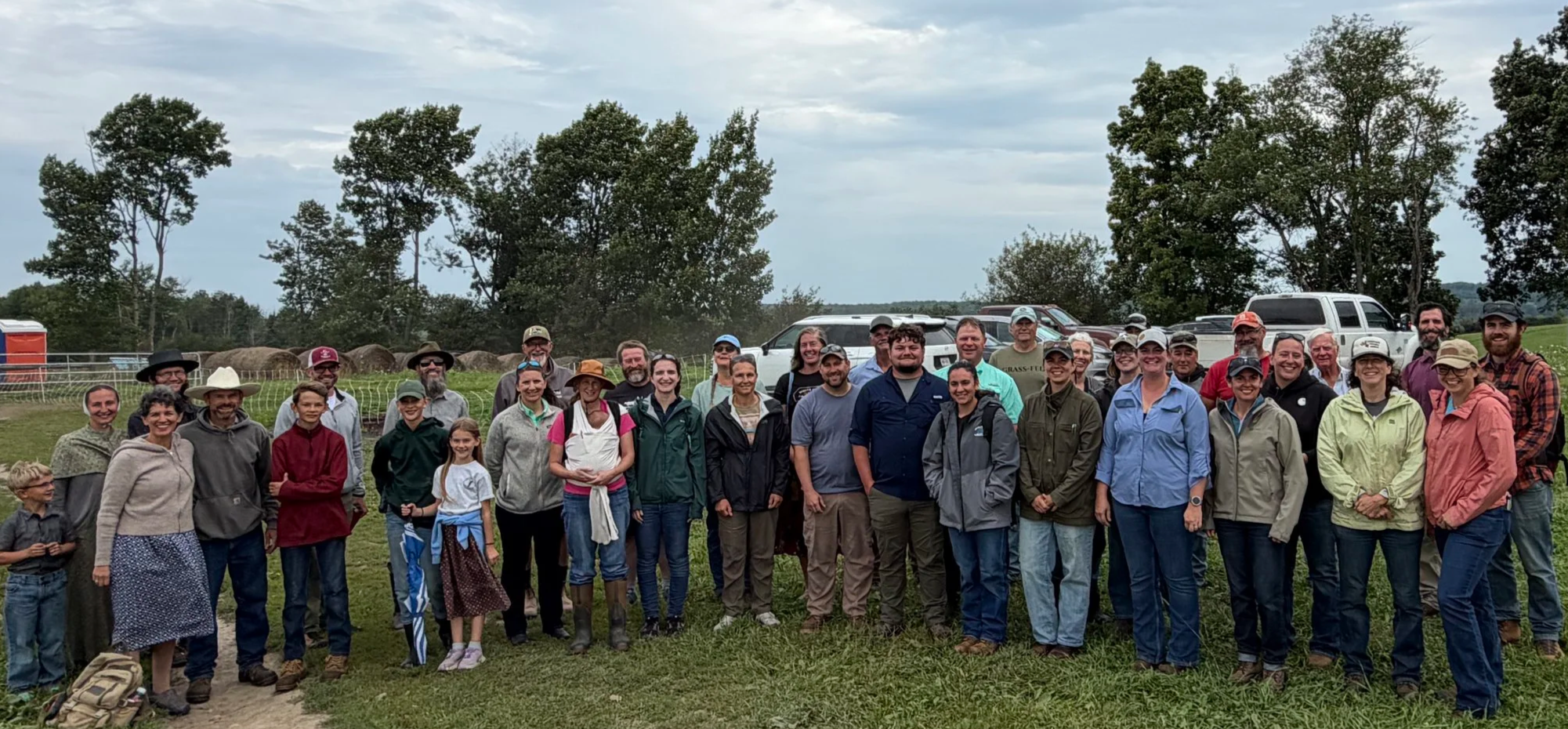
Ultimate Grazing School participants.
Don't miss your opportunity to join the next field experience in one of our regions, click the button below to join our mailing list today and never miss a move!