by Abbi Levin
If there’s a “universal truth” that applies to every American today, it’s that prices for just about everything are higher than they were a few years ago. This simple fact has countless implications, including that we must take meticulous care of what we already own. This includes our homes, our barns, and the tools we use every day to manage our property and livestock. One of the most important tools many farmers and ranchers use daily is the horse, and caring for our equine partners is more important than ever to ensure they have many happy working years ahead.
A healthy horse begins at the hoof.
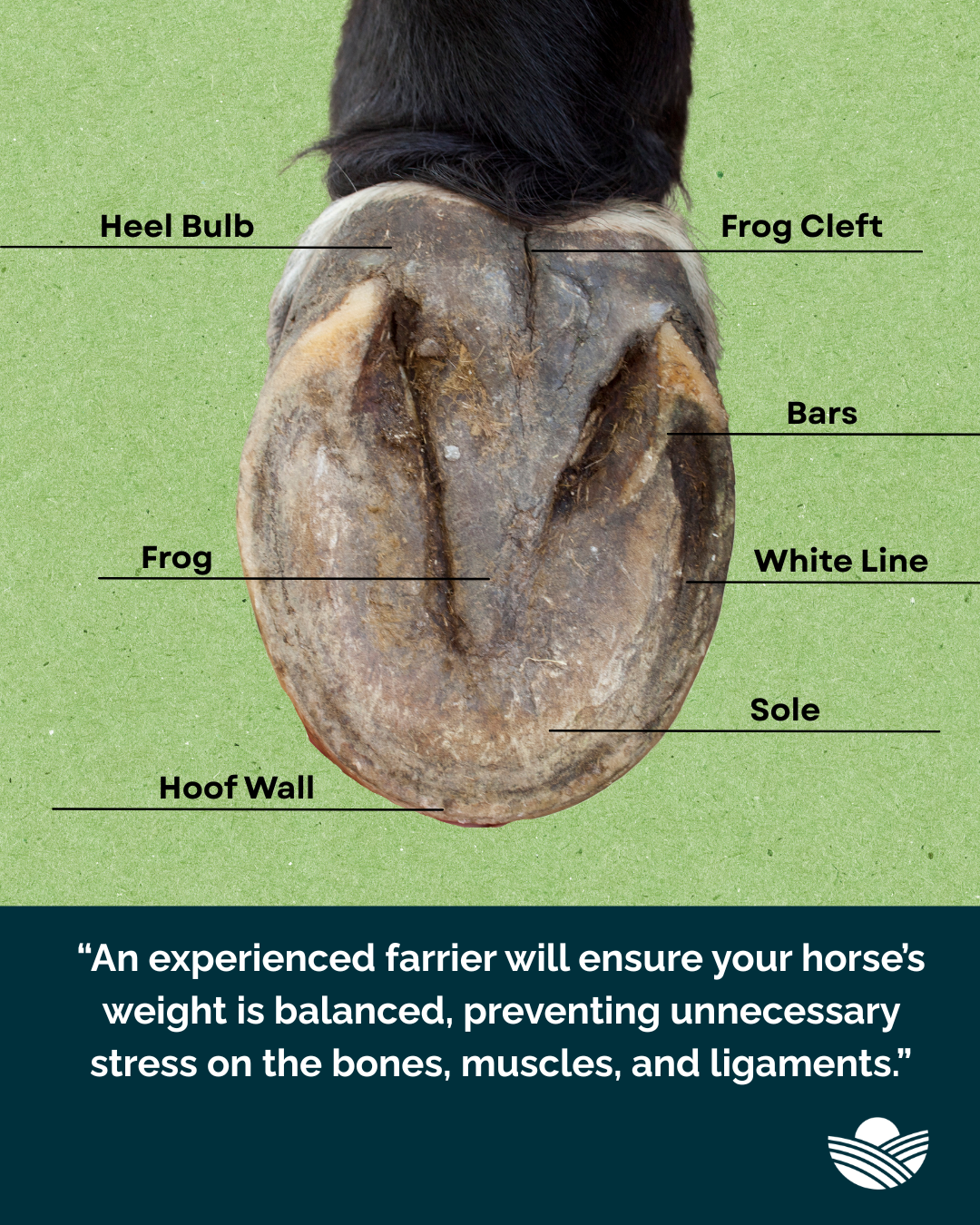
One of the simplest ways to promote a healthy hoof is to maintain a regular schedule with your farrier. An experienced farrier will ensure your horse’s weight is balanced, preventing unnecessary stress on the bones, muscles, and ligaments. They can also recognize common hoof issues, like thrush, laminitis, or abscesses. Keep in mind that the frequency of trimming will likely change slightly throughout the year as seasons change. Often, a horse will need more frequent trims in the summer, when hoof growth increases, and slightly less frequently in the winter (University of Minnesota Extension, n.d.). As with many other potential health issues, proper nutrition through hay, fresh, clean water, and any needed supplementation is critical to maintaining a healthy hoof.
Strong bones and muscle are key to your horse’s long career.
Horses are powerful animals, and that power comes from healthy muscle, ligaments, and bone. A study by Kentucky Equine Research found that, after nutrition, exercise is the second-largest factor affecting bone strength (Kentucky Equine Research. (n.d.). Building and maintaining a horse’s musculoskeletal system requires a nutritious diet and regular turnout. For horses that cannot be turned out, either because of limited space or health restrictions, dry lots or arenas can provide movement. Riding sessions can also help your horse build musculoskeletal health through exercise. That said, much like humans, horses require rest and recovery after exercise to build muscle and help prevent injury. If you are unsure how to evaluate your horse’s current fitness level, a qualified veterinarian can help identify weaknesses in diet or exercise and suggest ways to address concerns.
Listen to their gut – rumbles and all!
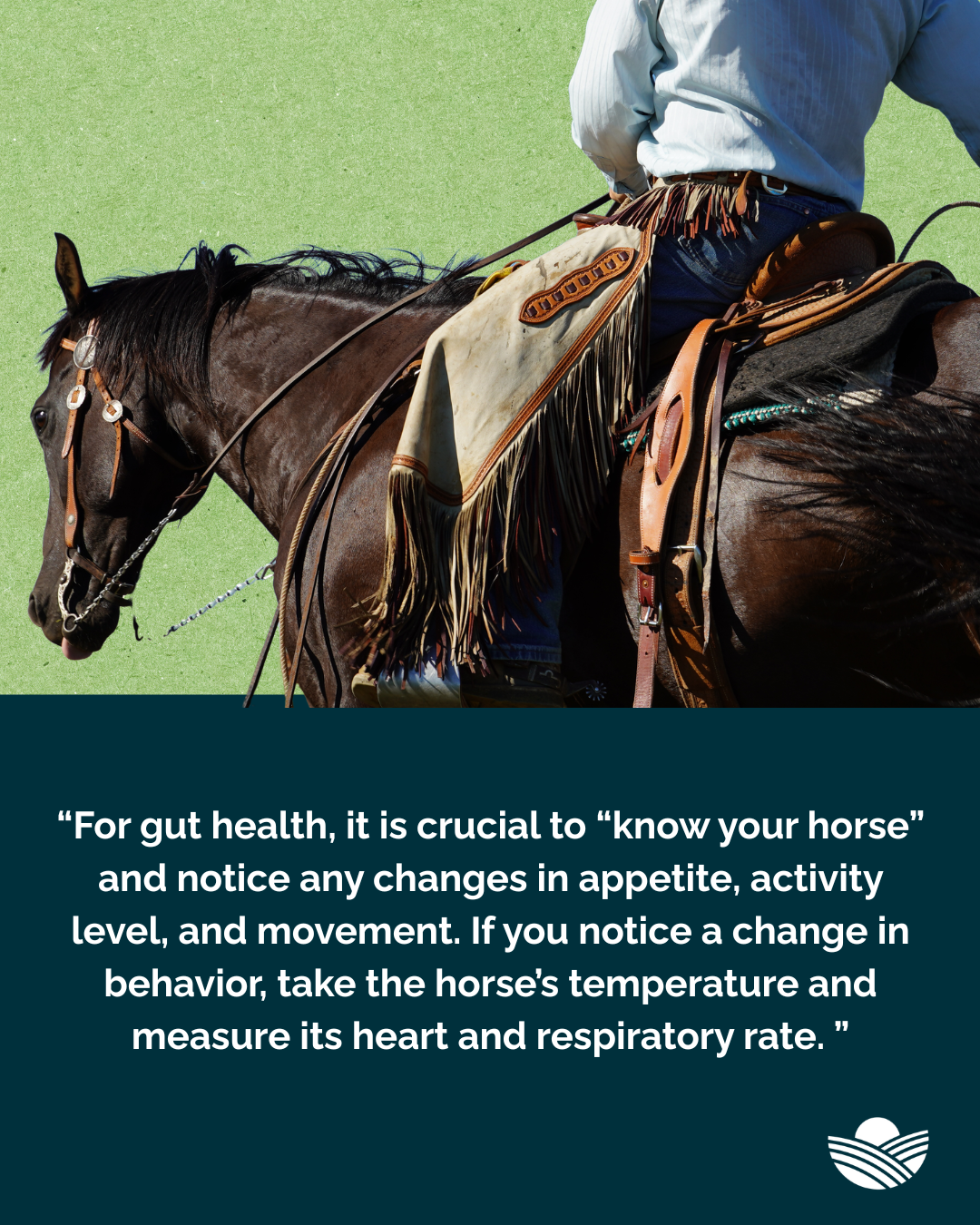
A healthy gut is integral to keeping your horse happy, healthy, and thriving for years to come. The most common gastrointestinal ailment for horses is colic. As previously discussed, a healthy diet and access to clean, fresh water can help prevent colic by supporting a healthy ecosystem of organisms like beneficial bacteria, protozoa, fungi, and yeasts in the hindgut. Constant access to healthy forage is critical to promoting gut health and avoiding colic. It prevents the build-up of stomach acids and encourages saliva production, which helps prevent ulcers, a painful, open sore in the horse’s stomach lining. For gut health, it is crucial to “know your horse” and notice any changes in appetite, activity level, and movement. If you notice a change in behavior, take the horse’s temperature and measure its heart and respiratory rate. Elevations in any of these measurements are cause for concern. Finally, it helps to listen to the horse’s gut for digestive sounds; the absence of rumbles could indicate something is off.
Don’t forget their teeth!
A plan for thorough horse care is not complete without considering your horse’s teeth. As they age, horses’ teeth change; however, the need for proper care from a vet or equine dentist does not. A horse’s teeth continue to grow throughout its life, as chewing constantly wears them down. The horse’s upper jaw is wider than the lower jaw, and wear often happens unevenly, creating uncomfortable points. To prevent these points from causing issues in eating or behavior, an exam and teeth float, a procedure in which the points of the teeth are ground down, should be scheduled regularly. A savvy horse owner should watch for signs that something may be off with their horse's teeth. These signs include weight loss, refusal to chew, head shaking, or refusal to accept a bit. Again, knowing your horse’s baseline behavior helps you spot changes and address dental health issues before they escalate.
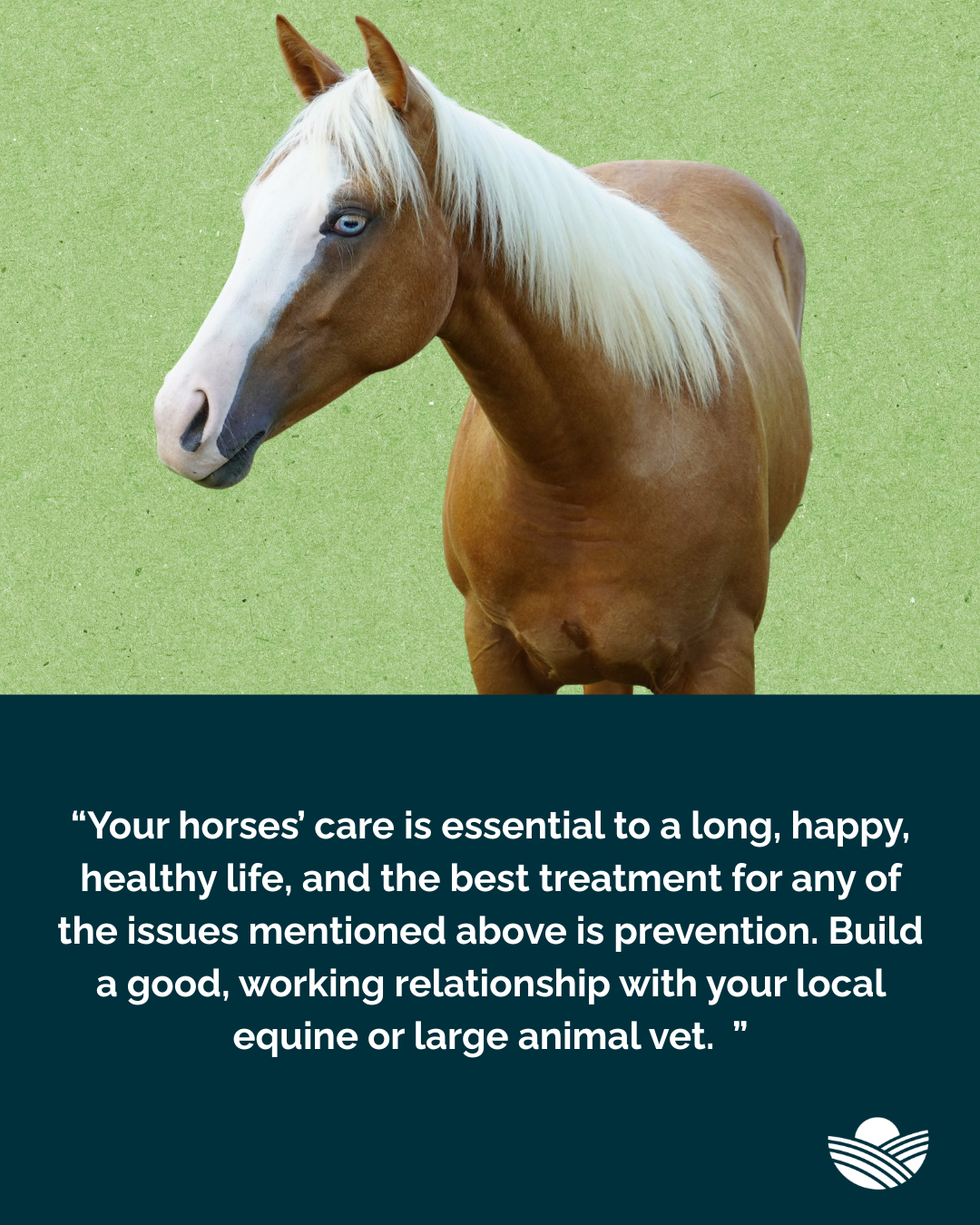
While this blog only scratches the surface of proper equine care, it provides a strong foundation for a regular maintenance plan. Your horses’ care is essential to a long, happy, healthy life, and the best treatment for any of the issues mentioned above is prevention. Build a good, working relationship with your local equine or large animal vet. Always take proper care of your equine partner; you can’t afford not to!
Helpful Resources
Kentucky Equine Research. (n.d.). Training and bone development. https://ker.com/equinews/training-and-bone-development/
SmartPak Equine. (n.d.). The equine gut microbiome: Its role in immunity and behavior. https://www.smartpakequine.com/learn-health/equine-gut-microbiome-role-in-immunity-and-behavior
University of Illinois College of Veterinary Medicine. (n.d.). Horse teeth. https://vetmed.illinois.edu/pet-health-columns/horse-teeth/
University of Minnesota Extension. (n.d.). Caring for your horse’s hooves. https://extension.umn.edu/agriculture/animals-and-livestock/horse/caring-for-your-horses-hooves
Missouri Extension. (n.d.). Feeding horses. https://extension.missouri.edu/publications/g2740