Let’s Talk Grazing 101
by Troy Bishopp and Tom Shea
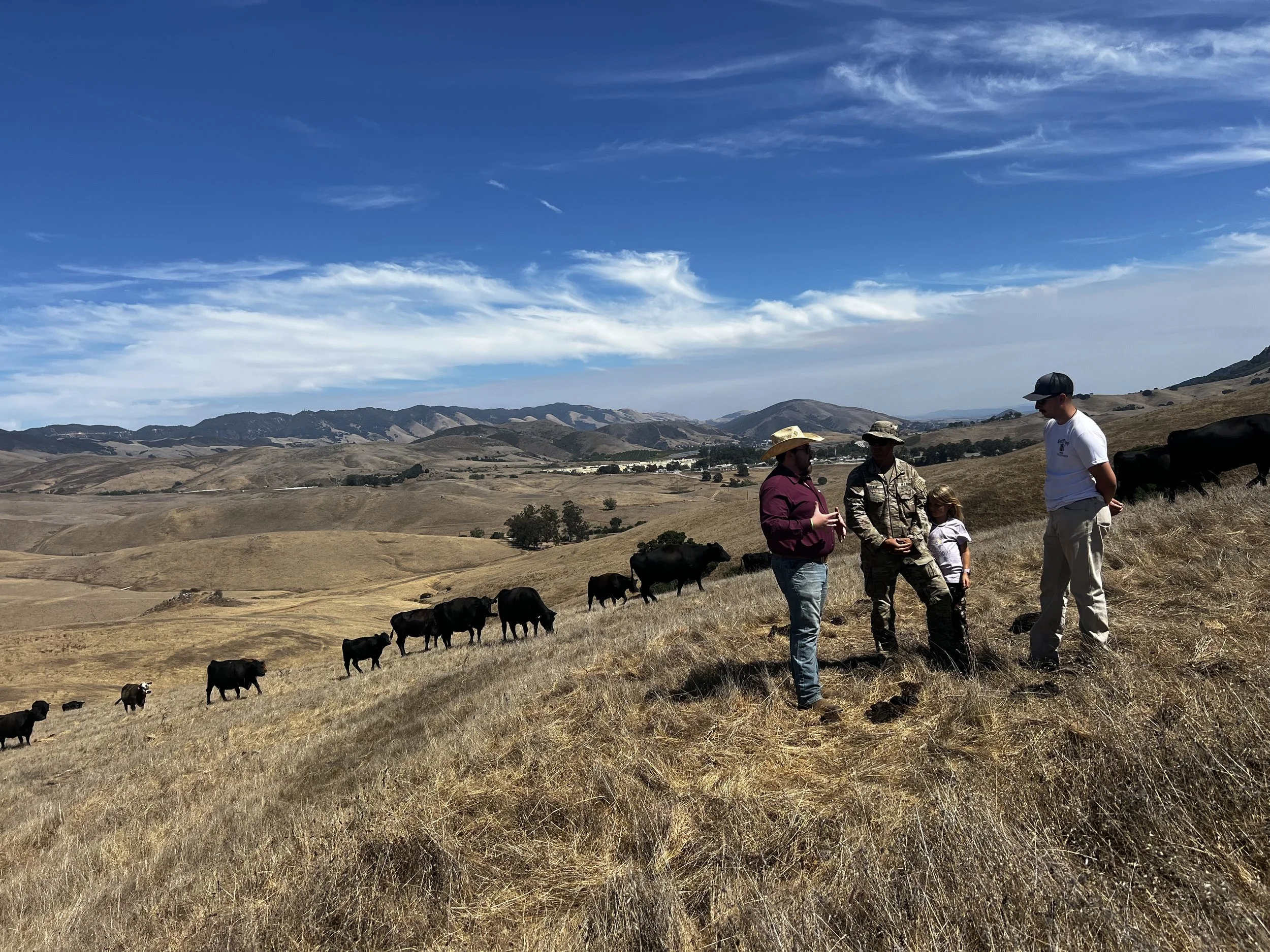
When I’m asked to discuss the topic of “Grazing 101”, it’s a difficult assignment because everyone has a different perspective on what that constitutes. Do you care about the theories, recipes, and core grazing principles and practices, or do you want to skip right to doing? I’ll lean on Stephen R. Covey, who famously said, “To begin with the end in mind means to start with a clear understanding of your destination”.
My grazing bro, Tom Shea, and I were brainstorming this idea on what to address. I couldn’t help but draw on my 40 years of pasture-based production and 20 years in the grazing TA field, helping my farming and conservation peers implement a system that “Meets people where they are”. My general roadmap follows an already nuanced “9-step planning process” by USDA-NRCS”.
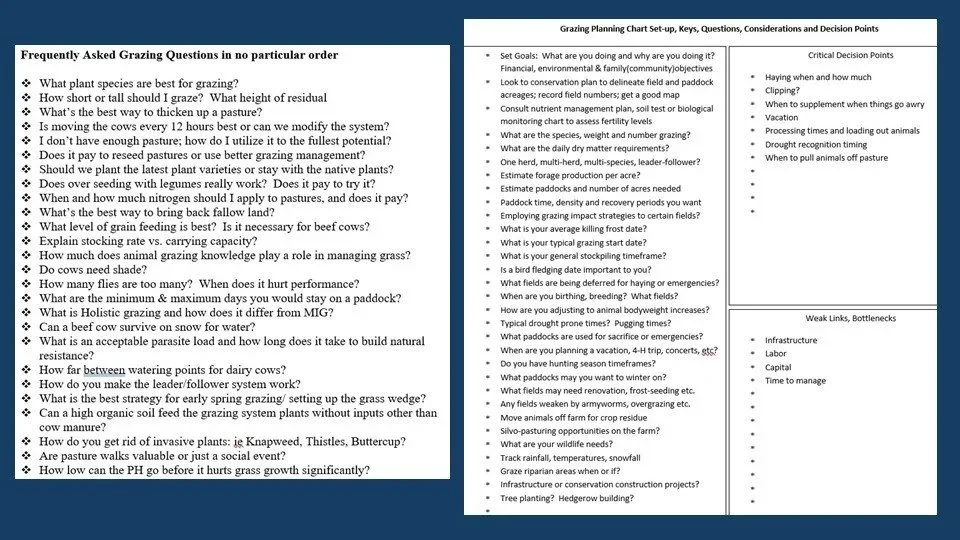
My steps may vary in order, scope, and vernacular, but we are heading in the same general direction depending on the situation. If you look at the FAQ and grazing planning considerations, I’ve accumulated over the years, most are asking---How? This is understandable, but there needs to be much more thought put into the “Why” and the holistic context, which addresses the financial, environmental, community, and family dynamics.
The “Why” can seem like a surface-level question, often answered with “because I want to raise animals or feed my family.” However, the question “Why” goes deeper than that. Do you want to make money? Why do you want to feed your family from farm-raised foods? Are you on a healing journey, were you gifted land and want to keep a legacy going, and many other whys?
After the “Why,” in my opinion, comes education and arguably the most important step. This can be formal, such as books, internships, or mentorship, but it is critical to success. So many times, beginning farmers and ranchers get animals first and wait until something goes wrong to start the education part of the journey. Recently, I had a couple come up to me at a field day and tell me they had bought land and a handful of animals and were struggling to raise them successfully. They asked, “In your honest opinion, what is our next step?” and I told them to sell the animals, start going to workshops, find a local farm to work on, and start back with their own animals when they are ready, with a clear why, some experience, and goals.
So, after some 101 thoughts, my journey starts with identifying goals in a context that drives future decisions. My next steps are in boots, on a reality walk, observing the opportunities and challenges in the identified context. I typically build grazing scenarios and action plans from this enjoyable field visit. Then a quality map and plan are made with all its glorious pieces and parts, i.e., (Forage demand, forage supply, stocking rate, residency time, recovery periods, paddock sizing, acres allocated, etc., etc.).
At some point, this activity will move the needle towards some implementation on the land. More importantly, the planning process may just indicate what you don’t want to do, or that more thought is necessary to make a profitable decision. When it comes to implementation and walking the land, it often dictates your goals, such as profitability, work-life balance, and, surprisingly enough, which animals you can successfully raise. Here’s a question for ya, how long do you think this starting process should take?