
See Where We’re Headed: 2026 Grazing the Heartlands Bus Tour Stops Revealed
By Abbi Levin

The National Grazing Lands Coalition holds a board meeting every year before the bus tour kicks off, and last year, the NatGLC planning team decided to add something unique to the 2026 tour. We aimed to visit three states in two days, and with help from our event partners, the South Dakota Grasslands Coalition, the Minnesota Grazing Lands Conservation Association, and the Nebraska Grazing Lands Coalition, that goal has been achieved. The tour will be based in Sioux Falls, South Dakota. On day 1, it will visit ranches in Minnesota and South Dakota, and on day 2, it will visit two ranches in Nebraska. Not only will we travel through three different states, but our attendees will also have the opportunity to see four unique approaches to soil & grazing management, herd health, and business strategy. Before you hop on the bus, let’s take a virtual “preview” tour of the ranches we will visit on our two-day adventure.
Day 1
Stop 1: Amo Creamery, Minnesota
Amo Creamery is a multi-generational family farm based in Minnesota dedicated to producing high-quality dairy products for its local community. The Amo family has built their business through a deep commitment to neighbors, milk quality, and animal health. During the Great Depression, Maynard Johnson began building Amo Creamery's legacy, establishing the family farm and nurturing a passion for land stewardship, dairying, and advancement in each generation. Today, the grandson of Maynard, Ethan Johnson, leads the creamery with a focus on fresh, local dairy products and carefully selecting A2 cows for easier digestion and superior flavor. The creamery continues to follow the path of tradition, through quality dairy products, and thoughtful herd management, centered around community and family.
Stop 2: Pasque Ranch on Beaver Creek, South Dakota
The Zimprich family farm is managed by Jeff Zimprich and his wife, Kim, with a focus on habitat preservation, soil preservation & improvement, and grassland health. Pasque Ranch on Beaver Creek is a 152-acre ranch in the floodplain of Beaver Creek, which travels from the southeast corner through the farm to the northeast corner. It is this feature that affects many of the decisions made on the ranch due to flood risks, including those for cropland, riparian areas, and grasslands (both native & non-native). At Pasque Ranch, Jeff uses no-till methods, crop rotation, and crop residue to maintain soil health and increase organic matter. The riparian areas on the ranch are ever-changing, as flood events significantly impact them; however, they are left mostly wild, with the exception of noxious weed control. Finally, grasslands located within the ranch are cared for with preservation in mind. Some of these pastures are native, while others have been impacted by invasive plant species. However, the Zimprichs actively work to manage these invasives through fire and grazing strategies. With a variety of landscapes to manage, Jeff and Kim use a thoughtful, conservation-rooted approach to ensure that the land remains healthy for future generations.
Day 2
Stop 1: Hochstein Ranch, Nebraska
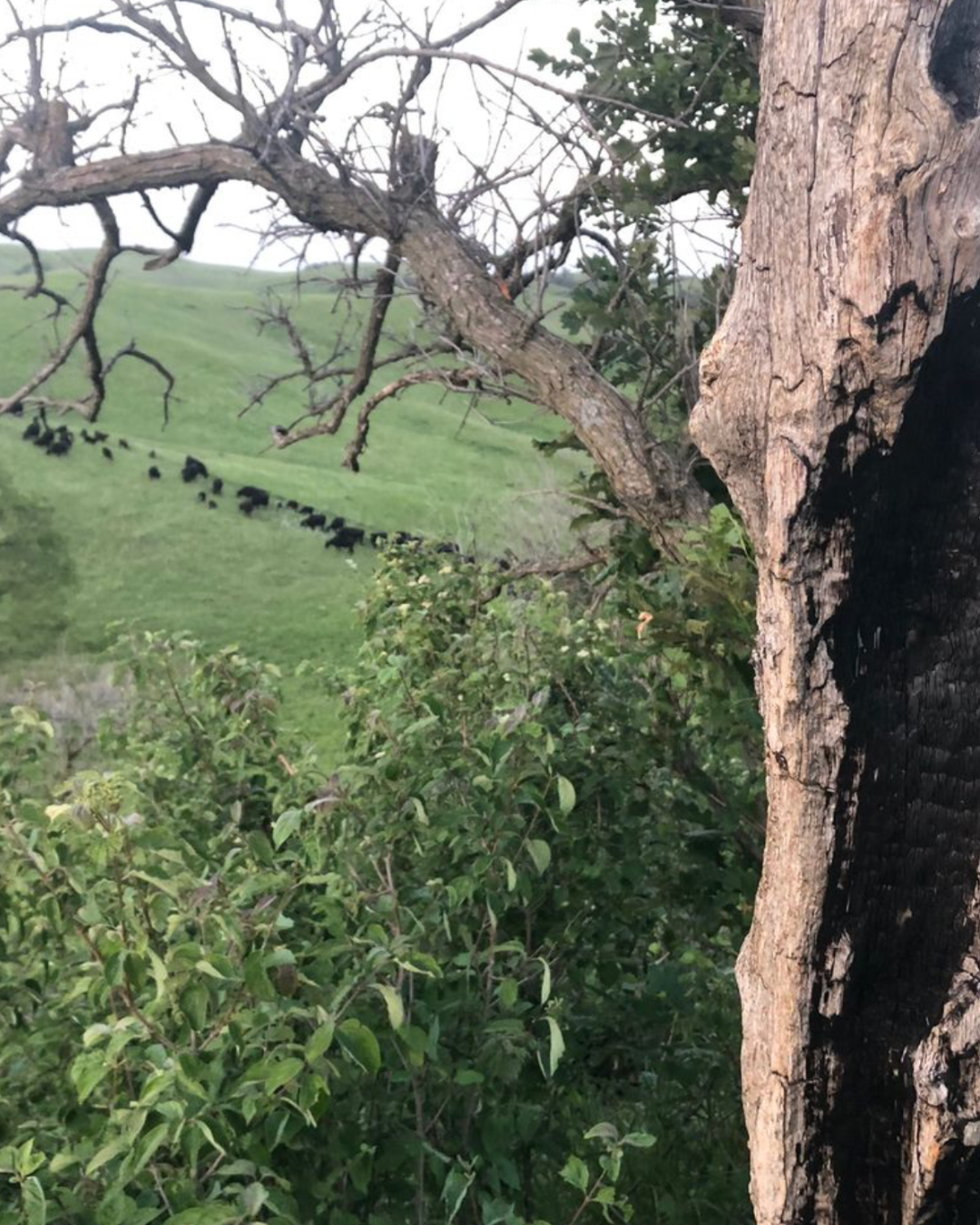
For Marvin & Mick Hochstein and the rest of the Hochstein family, ranch management is all about partnership. With over 1,000 acres of native prairie in Northeastern Nebraska, the Hochsteins have succeeded in preservation through management of our nation’s greatest renewable resource, our grazing lands. But they will be the first to tell you that they haven’t done it alone. Collaboration with the Nebraska Game and Parks Commission, the National Resource Conservation Service, Northern Prairies Land Trust, and Pheasants Forever has had a lasting impact on the Hochsteins’ land. Together, they have succeeded in providing a safe habitat for native prairie species, including the greater-prairie chicken, and in improving water quality and soil health in the Verdigris-Bazile Biologically Unique Landscape. This achievement hasn’t come without its challenges, like Eastern Red Cedar encroachment into grasslands. But, through controlled burning and other invasive management techniques, the Hochsteins have been able to conserve most of the grasslands on their property. The Hochstein family and their team of experts have shown how much can be achieved through a little hard work and a lot of knowledge sharing.
Stop 2: Jessen Ranch, Nebraska

The Jessen Ranch sits in the Sandhills/High Plains region of North Central Nebraska. The Jessen family has a rich history dating back to the homestead era, when they established a legacy of ranching. Over time, the Jessen operation transitioned to rotational grazing systems, built herds to match grassland carrying capacity, and ensured the water infrastructure supported their management system. This time spent on the land instilled a sense of stewardship in the family and drove them to build a system focused on preserving native grasslands and ensuring the Jessen Ranch was healthy for generations to come. Currently, Jessen’s work to manage their pastures and control invasive red cedar often includes prescribed burning. Rolling sand dune prairies with mixed grassland species mark the landscape of the Jessen Ranch, and the family remains intent on keeping it that way through innovative stewardship, restoration efforts, and a deep love of the land.
While a virtual visit to these ranches doesn’t do them justice, we hope you are as excited about our trip across state lines to four unique operations as we are!
The NatGLC team is excited to see you at our 2026 “Grazing the Heartlands” Bus tour.