Grazing Management: The Key to a Healthy Grassland
by Tom Shea
I recently had the opportunity to attend the Minnesota Grazing Lands Conservation Association’s (MNGLCA) Feathers on the Farm field day. This unique event, part bird-watching tour -- part grazing workshop, really seemed to work! It was the best-attended single-day grazing event I have ever been to, with over 75 people. After attending, I had major takeaways: first, I need to learn more about grassland birds, whose populations have declined by 53% or 720 million birds since 1970, according to Cornell’s Lab of Ornithology. The second takeaway was that MNGLCA accomplished one of the most important yet underutilized aspects of the livestock industry: we have to engage consumers and tell our positive stories.
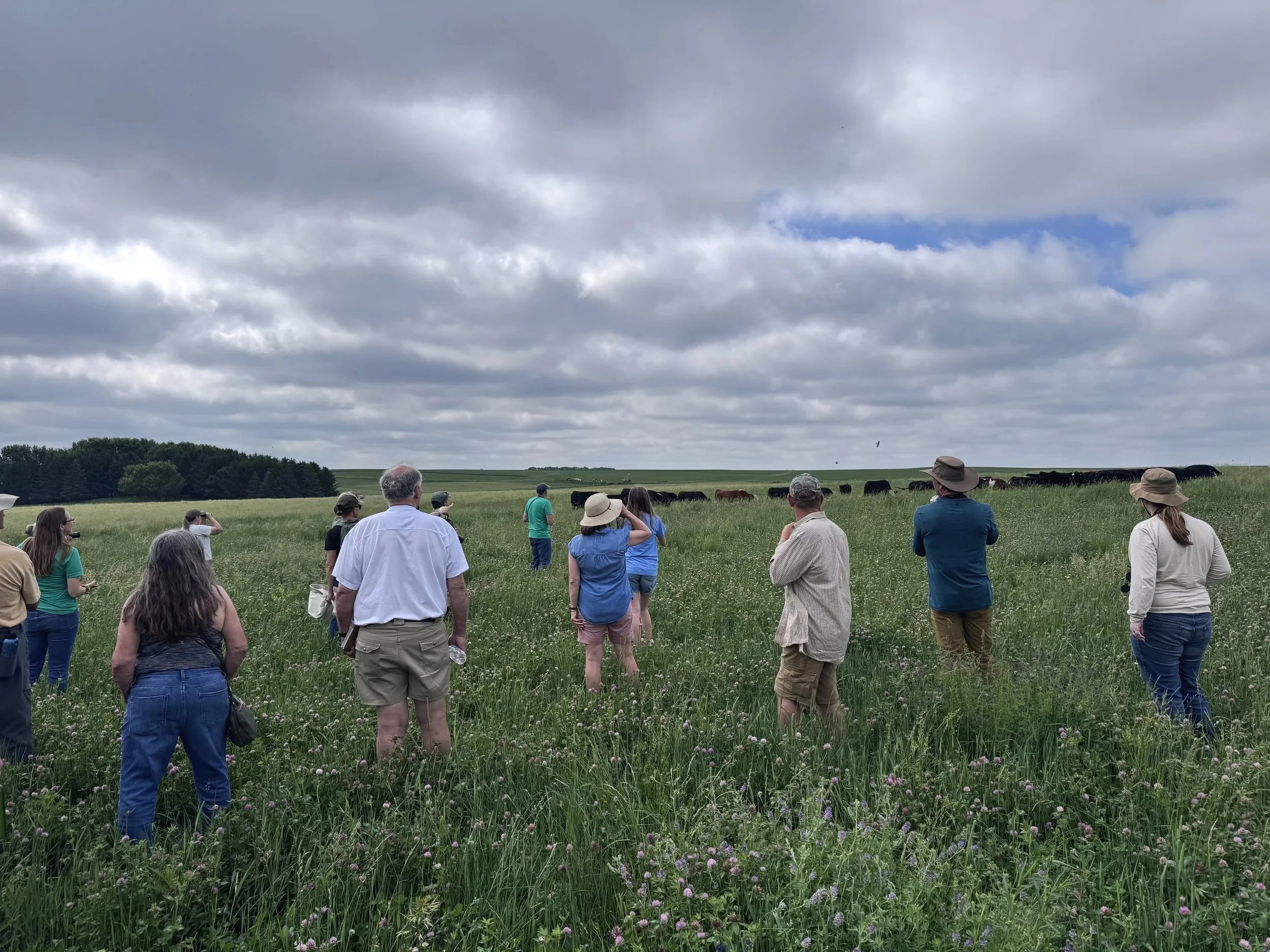
During the field day, we saw six bird species found only in healthy grasslands, some of which were once thought extinct in Minnesota due to grassland decline. Historically, 1/3 of Minnesota was Native Prairie; now, less than 2% of that intact Prairie remains. So, why were these grassland birds at Rock Dell Forage Farm? Three years ago, John, the owner of Rock Dell, no-tilled grass throughout his row cropping operation, parked his combine, and hasn’t pulled it out of the shed since. Though John didn’t plant native grasses, his management and the presence of continuous open acres in grass have encouraged the birds' return. John practices rotational grazing using temporary polywire paddocks to move cattle in a way that mimics historic grazers like bison, which would eat in an area and then move on. Excluding the cattle from areas that have already been grazed allows those spaces to rest and recover. The grazing pattern creates multiple habitats for the grassland birds depending on whether they prefer taller ungrazed grass or shorter grazed grass. These practices combined to make the ideal habitat for those six species of grassland birds. These rare birds drew many birders to the grazing field day to observe them and learn more about their habitat and why this operation attracted them. This opened up learning about grazing to an underutilized audience: consumers.
According to the 2016 Beef Quality Assurance Audit, the industry doesn’t always effectively communicate what we do to raise the highest-quality product while protecting the land and ecosystem. Using flora and fauna, such as native prairie grasses and rare birds, is an ingenious way to engage the public and consumers. This works doubly well for producers with direct-to-consumer markets, where they can advertise their products to participants at events. We need to highlight that producers care about both the well-being of the land and their animals. With the average herd size in the United States only being 47 head, there are many producers with a chance to make a small but mighty impact. Producers that practice best management practices for their herds better the land, allowing the land to provide for the animals, reducing input cost and increasing profits. This allows native plants and wildlife that have co-evolved with ruminant grazers to thrive.