My Emotional Support Mower
by Troy Bishopp
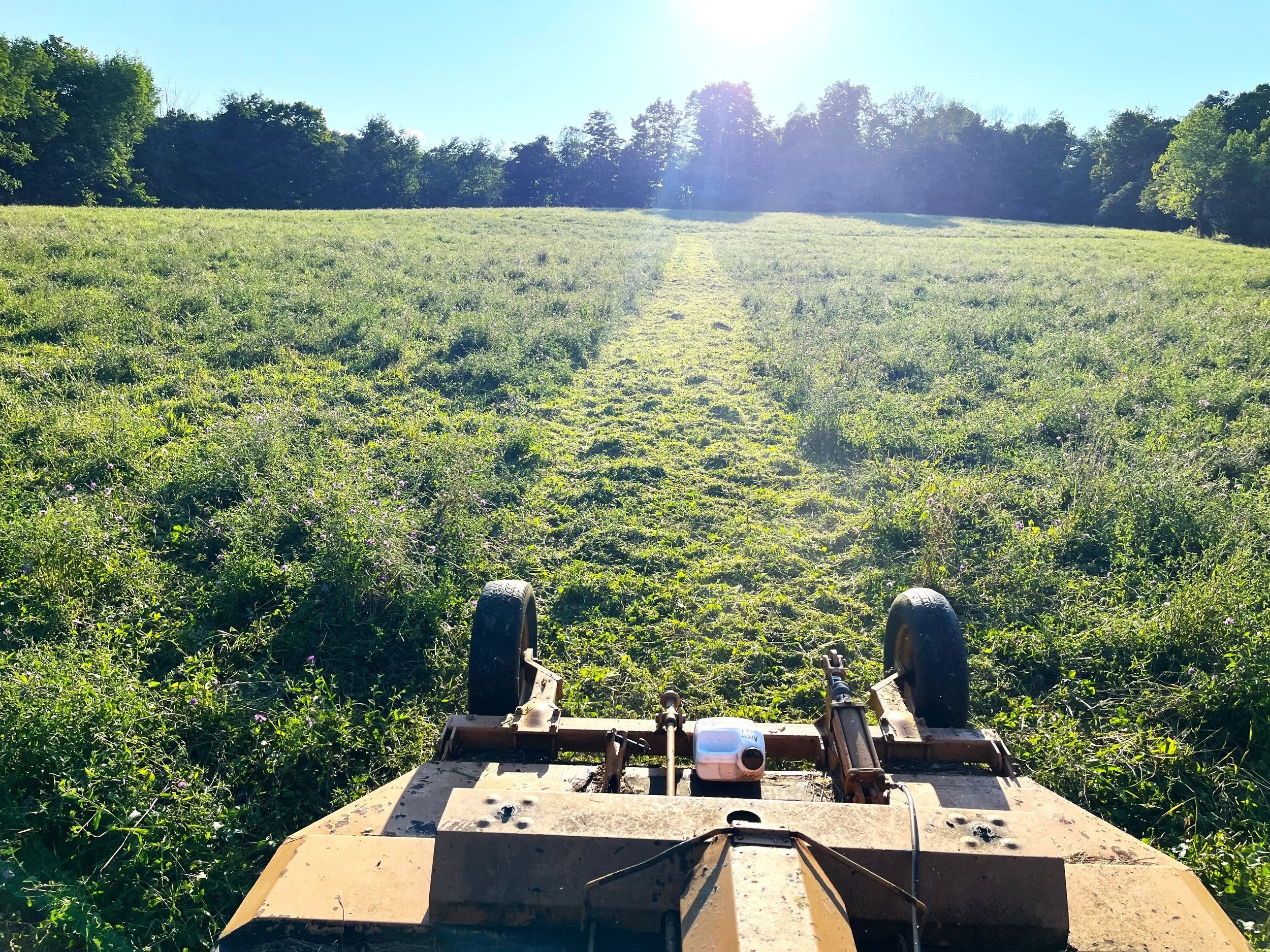
To an outsider, a farmer on a tractor is just doing mechanical labor, but to an elder, those repetitive rounds can become a moving meditation.
There’s always debate within grazing circles about clipping pastures as summer progresses. It’s the top 5 FAQ at any pasture walk and always a juicy subject for social media threads. The good thing about such a seemingly straightforward question is how many answers come out, given a farm’s context. I remind folks that the ambiguous mower run by either fossil fuels, “horse” power, or by an animal’s bite are “just tools, not rules” that each practitioner decides to use.
Pruning charms plant health and productivity. Mowing seems like practical, appropriate harvesting like haying. Clipping seems like fighting back the overgrowth you’ve lost the battle on. Adaptive grazing conveys all three. It seems the descriptors can trigger judgment. Just mention the term “Vanity mowing,” and see the old eyeroll.
I think about these things when I’ve done the adaptive grazing, pruning, mowing, and now, I guess I’m doing the egregious clipping as a way to control the invasive knapweed and Horsenettle, now that the cows only prefer the energy-enriched flowers. The context of clipping pastures has changed for me over the years, as something that was traditionally done to a targeted, timed impact that is thought through for the right reasons, even if they don’t align exactly with my peers.
Some of those reasons for managing too much biomass (waste) at certain times, on certain fields, stem from wanting to send roots deeper, improve water infiltration and plant diversity, grow the seedbank, provide wildlife habitat, stockpile some extra feed for weather challenges and create an epigenetically rich ecosystem by letting nature express itself in all its glory. In Newman Turner’s “Fertility Pastures” and the chapter on making herbal leys with a mower, he said, “I soon discovered the considerable benefit resulting from the use of the mower after grazing, which contributed to soil fertility and the subsequent nutrition of the crop from the feeding back of this un-grazed surplus.”
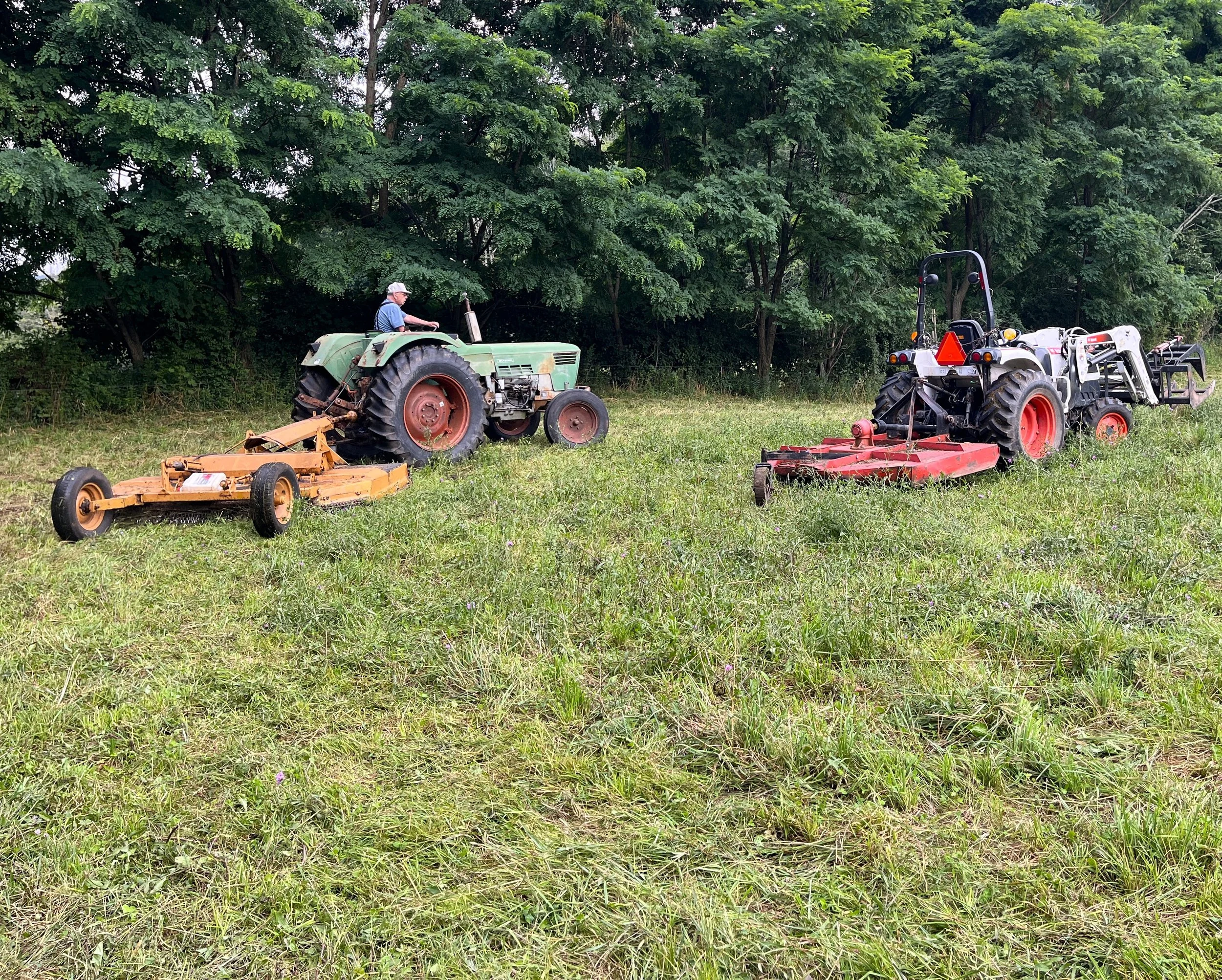
I’ll submit that clipping can be mindless, expensive work, especially with 6-dollar diesel, high equipment costs and labor requirements away from doing something more important. I would agree that you should consider all tools and options on your way to achieving whatever goals you desire and be mindful of decision-making for the good of the land, animals, people and communities.
But after 63 years in the field, I’m engaging in the “process of clipping” much like Wendell Berry uses “The Art of Loading Brush," as a “living metaphor for generational wisdom, humility, and to ‘make order’ out of chaos in a disposable world”. From the seat of my old 1974 Deutz 7006 tractor pulling our Woods brush-hog through the sixth-generation pastures that once felt the energy of a team of horses, a sickle bar mower and a man doing the same task, I have a vantage point into nature’s therapy.
As I sing songs from within my radio earmuffs and immerse myself in traveling every inch of the field, I become especially vulnerable as the sun sets and casts shadows and beams of light into places we don’t talk about as men. With every pass, it is a seat of honest reflection with memorable events, unimaginable sorrow, and intense clarity that floods my mind to the point of tears sometimes.
The rounds after proverbial rounds with my “emotional support mower” becomes an extended metaphor for the footsteps of a man who seeks to nurture a family’s greatest treasure---Resilient land. We need this peace from time to time, at least for me to heighten the senses for what truly matters when stress becomes overwhelming.
As dusk grows closer, I see a fox looking for field mice, the swallows dashing for bugs after the mower, deer bedding down with their fawns, and cows contentedly chewing their cud. Against the sound of the machine, it was becoming peaceful. The best part is shutting the old horse down and walking off the hill with just the symphony of silence playing in the background. It’s been a hard, emotional day, but a fulfilling one with the right perspective.
As I stop ceremoniously at our farm’s Matriarch “Thinking Tree”, I hear my children and grandchildren leaving Nonna and Pop Pop’s house, no doubt with some delicious treat. That is the sound that brings the greatest joy for the emotional elder.
“It is the country of my mind, the geography of my own thought and feeling... To be at all at peace here, one must be here in the body, using the hands and the eyes and the ears in the place.” ~ Wendell Berry from "The Long-Legged House".