Tools of the Trade in Range Sheep Production
by Kendra Young
Raising sheep can be a fulfilling enterprise. Depending on the breed, sheep are very adept at producing meat, wool, or dairy, or can be a dual (multi)-use animal. Some people even raise sheep as pets. They have a smaller frame size than cattle and don’t require large equipment like chutes for everyday handling, so they are a perfect fit for those who want to raise just a few animals in their backyard or have only a small piece of land for grazing livestock. However, on the opposite end of the spectrum from small homesteading and hobby flocks, lives the range sheep band. Range sheep operations in the western United States can contain thousands of animals and cover hundreds of thousands of acres of land, creating massive, large-scale agricultural production enterprises.
Owning five thousand sheep is vastly different from owning five. “Raising” a range band of sheep comes with its own unique set of duties and challenges, requiring tools dedicated to the job. The vastness and remoteness of some of these operations just add to the necessity of the tools of the trade. To keep an operation running smoothly, this broad definition of tool can include the actual tools utilized in production, the people behind the work, and even the infrastructure built to strengthen the cause. Examples of some of these "tools" are explained below.
As with any job this big, running a functioning range sheep operation begins with the workforce behind the job. Range bands of sheep require constant attention; to assist with predation management, ensuring best grazing practices, and the general up-keep of the animals. A sheepherder is someone employed by the owner that stays with the sheep twenty-four hours a day, seven days a week when the animals are on pasture or grazing rangelands. Most sheepherders are foreign workers operating on a temporary basis under a federal H-2A visa. As most herding jobs are located in remote settings, working very irregular or non-traditional hours, the U.S. Department of Labor has even issued further regulations governing this employment known as the "H-2A Herder Final Rule" (Employment and Training Administration). This type of sheep herder can be of any nationality, commonly including those from Peru, Mexico, and the Basque region (the area along the western Pyrenees Mountains between northern Spain and southern France). A second set of people instrumental to the sheep operation is the shearing crew. In the western United States, these crews start in the southern part of the country and follow the spring northward, working as they go, ending in states like Montana later in the year. Most shearing crews are self-contained teams. They travel together, operation to operation, and work from a portable shearing shed that is pulled along with them. This "shed" allows unshorn animals to enter on one end, numerous shearers work simultaneously inside, and the shorn sheep can exit on the other end. A complete set-up on wheels. Shearing crews can get through hundreds of animals in a day, providing a contracted service to the owner in a timely and efficient manner.
Range sheep operations can handle the lambing season one of two ways. First, ewes can range lamb - meaning they have their lambs on the desert grazing allotments they are currently feeding on. It is important to remember that this can be a very labor-intensive lambing system; ewes are free-ranging at this time and the ewes and/ or lambs are susceptible to the effects of predators, weather, the ewes walking off, and a myriad of other factors at this time. But animals can continue on their grazing plan during this approach, without the need for added infrastructure or transportation of the band. The second lambing set-up is shed lambing. In this sort of system, the pregnant ewes are brought to a set of pens and buildings prior to lambing. Each ewe is placed in a small (individual) pen, also known as a jug, when she is close to lambing or has just lambed. Each ewe and her lambs spend a couple of days in the jug to bond, also allowing workers to monitor the family. Once the lambs are a few days old, the family unit is moved to a slightly larger pen, with a few other ewes and lambs, for a few days. They are then moved to a slightly larger pen with a larger herd of ewes and lambs, following this process until the entire band has rotated through the lambing shed and transitioned back into one main herd. Shed lambing provides a more rigid approach to monitoring and protecting animals during the lambing season, while also providing animals with direct access to feed and water in a more feed-lot type setting. Ewes with new lambs are housed inside a building, potentially reducing the effects of predation and storms on the little ones, but infrastructure costs and maintenance can be a downfall in the system.
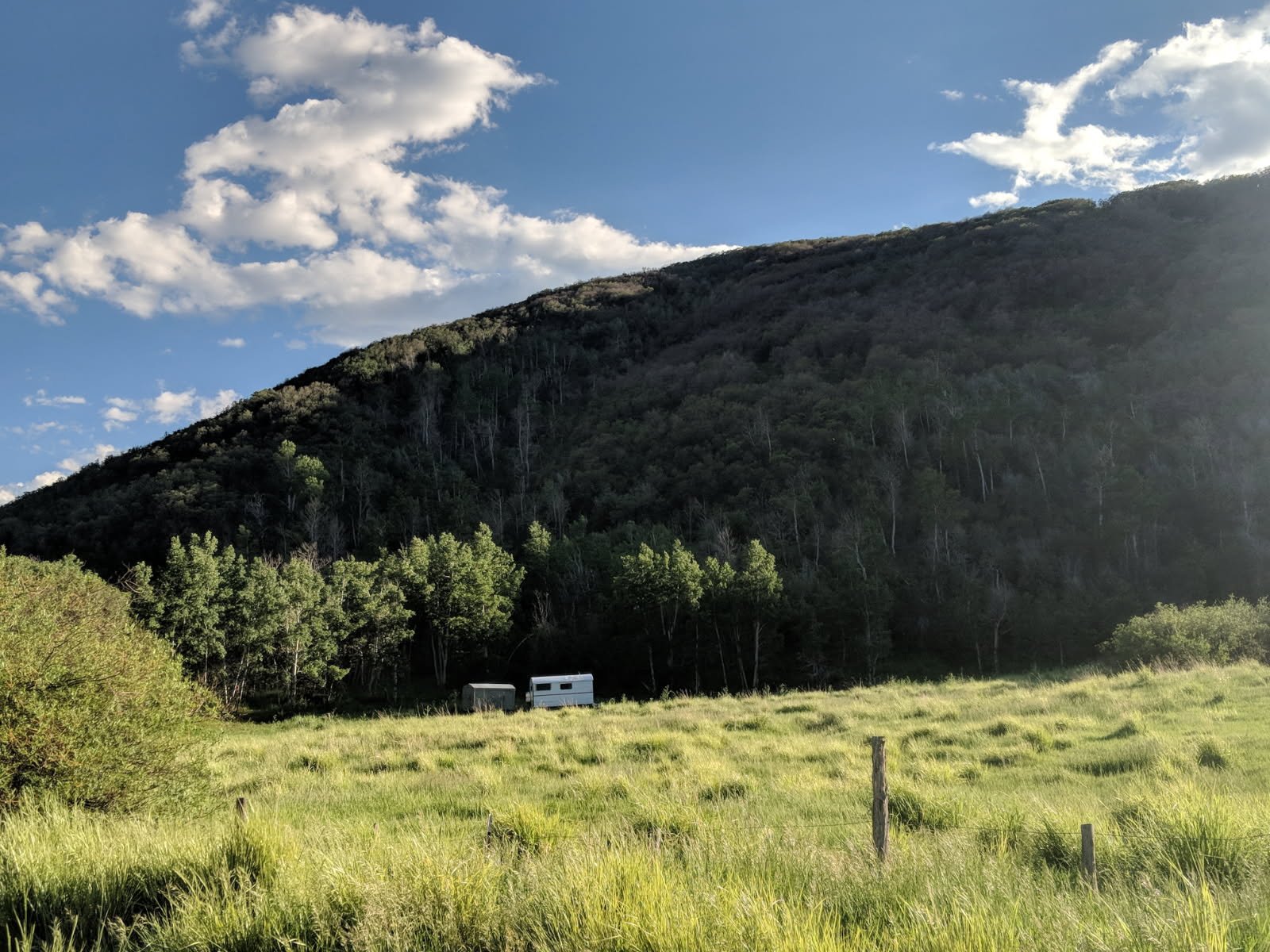
As mentioned before, range bands of sheep need a herder with them all the time. This includes when animals are on grazing allotments on the desert in the winter and higher in the forest in the summer. The ruggedness and remoteness of these landscapes necessitated the need for compact, transportable, living quarters for those tasked with herding duties. This led to the invention and heavy usage of the "sheep camp" or "sheep wagon." A sheep camp is a roughly six-foot by twelve-foot specialized camping trailer that historically provided a bed, a fold-down table, a wood stove, and lots of storage (Gilvary 2026). More modern camps can vary in size and amenities included within. Herders can stay for months in a sheep camp, tending to their animals. The camp tender was a person that traveled between camps, delivering supplies and providing a line to the rest of the world. Some operations also include a similarly shaped "commissary wagon" with the sheep camps that serve a more practical purpose for storage (saddles, dog food, hay, etcetera) and have a feeder built into the side for the herder's saddle stock.
Communication of area information, location, and directions were key to herders, especially before the invention and mass popularity of cell phones, wi-fi, and coast to coast cell service. Historically, sheep herders relied on a more natural approach - things like rock cairns and arborglyphs fit this niche almost perfectly. By basic definition, a rock cairn is a (historically built) rock pile or column that served as a marker or trail guide. And arborglyphs are the carvings into the bark of trees, mainly aspen. This could include carvings such as dates, names, initials, and even trail markers or other pertinent area information. Both rock cairns and arborglyphs could also be built as a way to pass the time, and certain forested areas are known for their artwork, such as animals, women, or faces on the trees (Great Basin National Park, Nevada 2025). For many, nature was full of shared information, if you knew where to look.
Working within a range sheep operation takes a special kind of person to thrive, or even survive. The wide-open spaces of the American West can be daunting to some. But with the right tools - whether that be the people, the buildings and infrastructure, or even pieces of the landscape - a range sheep operation provides a very worthwhile calling to all those involved.
Employment and Training Administration. (n.d.). H-2A Herder Final Rule. U.S. Department of Labor. https://www.dol.gov/agencies/eta/foreign-labor/programs/h-2a/herding
Gilvary, J. (2026, February 17). Sheep Wagons and the Shaping of the American West. Buffalo Bill Center of the West. https://centerofthewest.org/2026/02/17/sheep-wagons-and-the-shaping-of-the-american-west/
Great Basin National Park, Nevada. (2025, December 14). Basque Sheepherder Aspen Carvings. National Park Service. https://www.nps.gov/grba/learn/historyculture/basque-sheepherder-aspen-carvings.htm