
AgVenture in Italia
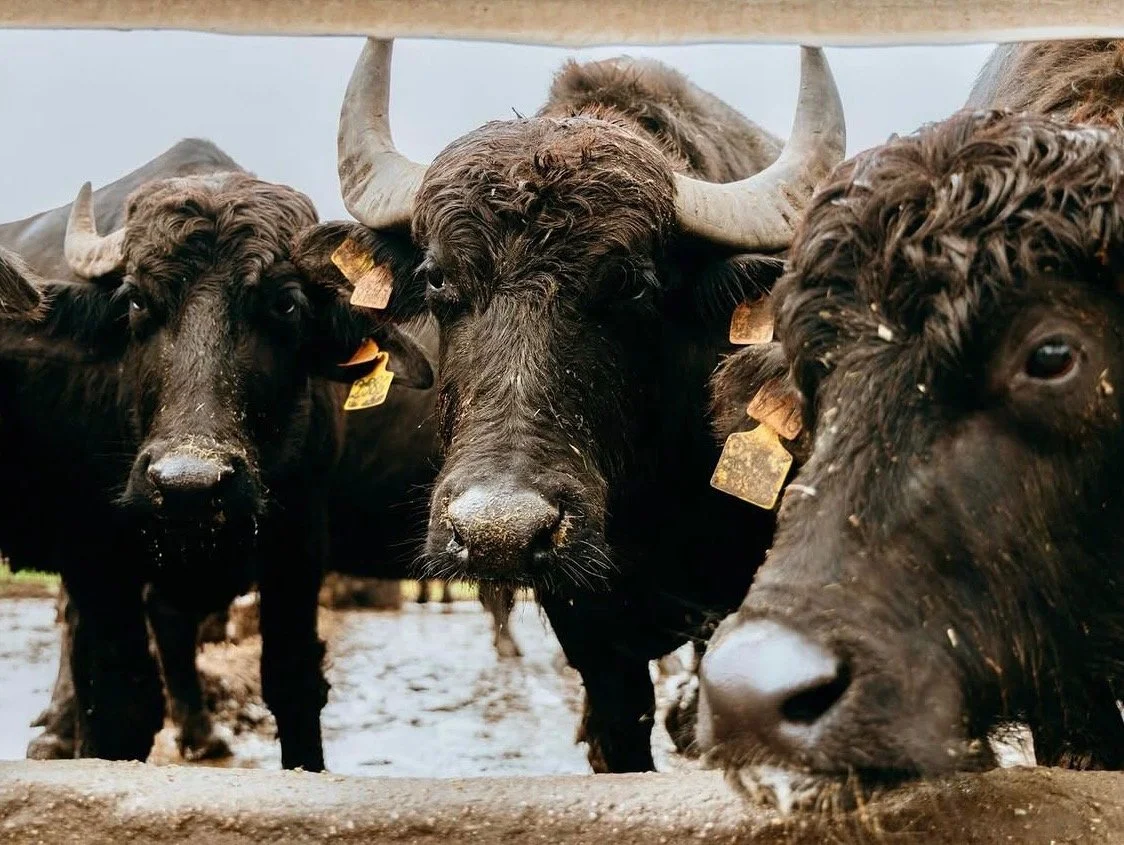
Italian buffalo used for producing dairy products - La Maremmana
I am an Agricultural Communications major at Mississippi State University, and I recently had the opportunity to travel to central Italy for 10 days to learn about agricultural practices in Europe. I traveled with students from different areas of study, such as Agriculture Education, Agriculture Leadership, Precision Agriculture, Supply Chain Management, and Mathematics. We each came in with different levels of knowledge and understanding of agriculture in the United States. But at the start, what we shared was that we had little knowledge of how things were done in Italy.
Even though I missed home, there were things I wished I could bring back with me. Before I get there, let me tell you a few things that shocked me while I was traveling.
We visited multiple farms, each with its own focus; from agricultural outreach at Coldiretti to fruit and crop production, a cow-calf operation centered on the ancient Maremmana breed, rice production, of course, a winery and vineyard, and even a buffalo dairy facility.
Starting with a feedlot owned by Bonifiche Ferraresi, a company that supports the Italian agro-industrial sector through its focus on innovation, partnerships, and modern farming practices. The first thing we noticed was that none of these animals were castrated. After learning about where these bulls came from, the regenerative practices this company used, and that most of the cattle before us were Charolais crosses, we asked, "How come none of your cattle are castrated?" The farm manager looked perplexed and explained that the bulls produced more muscle than the “toro castrato”, also known as a steer. He then explained that because Italians enjoy leaner meat, the fat is less desirable to their customer. We explained, in contrast, that in the US, we enjoy marbling in our beef, and that much of our market beef is bred from Angus or black-hided cattle. The manager explained that over the last year, he has watched hundreds of cattle come and go, and he has only cared for two black bulls. “On this diet,” he said, “when they left, they were so fat they could barely walk; we don’t want that.”
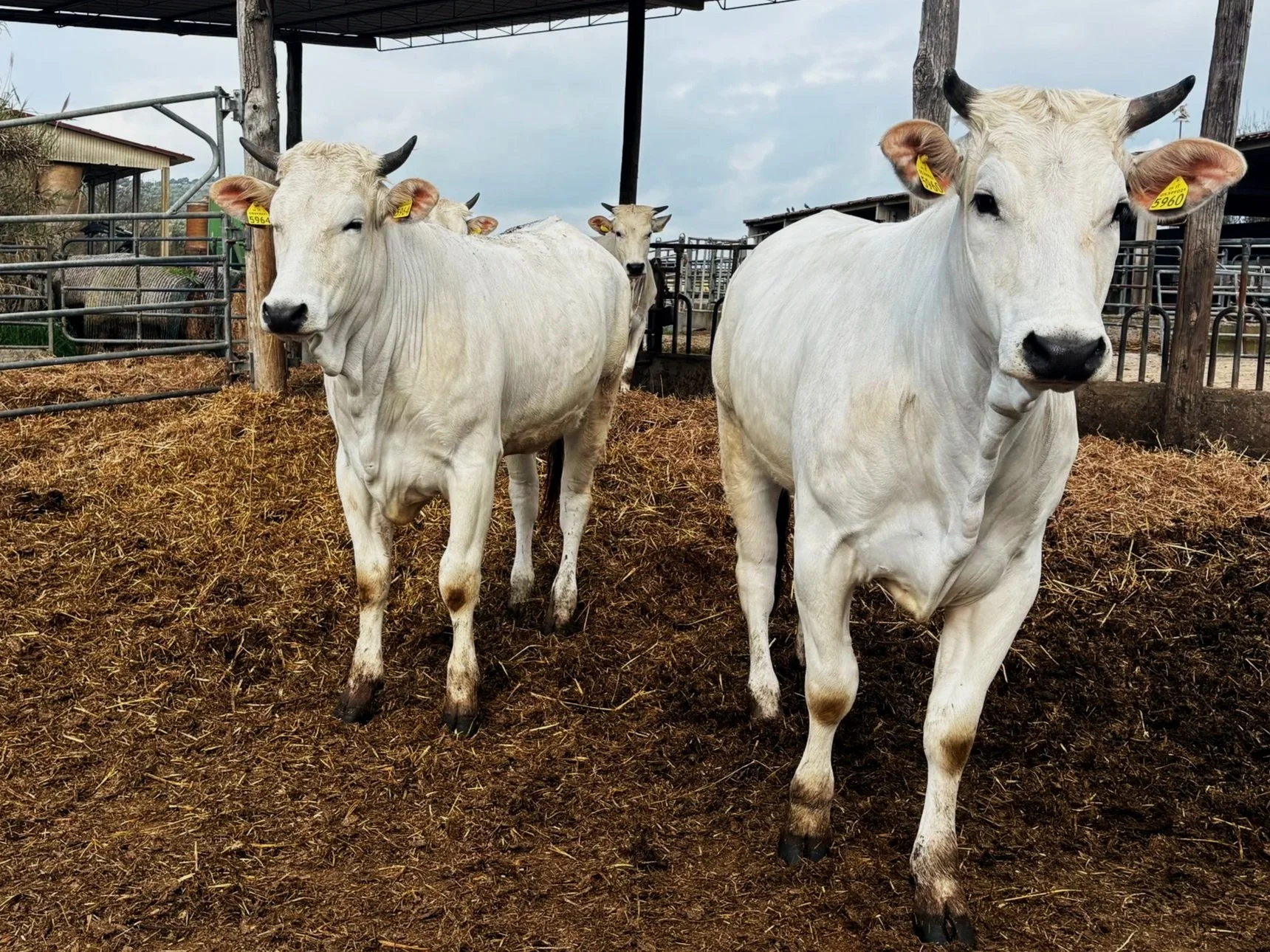
Chianina Heifers - La Selva
Next, we visited LaSelva Farms, which focuses on growing fruits and vegetables using regenerative practices and on raising its herd of Chianina cattle, one of the oldest breeds of cattle in the world. They grow a wide variety of crops, from tomatoes and wheat to artichokes, grapes, olives, and many more. As their crops rotate in and out of season, their cattle serve multiple purposes: a certified cleanup crew, utilizing the natural by-products from vegetable and fruit production, and a source of self-spreading fertilizer. Allow me to explain, as LaSelva Harvests all their crops in a field, they release these large white cows behind the harvest, turning their farmland into grazingland. They graze the weeds and the unused parts of the plants. As they are busy eating while LaSelva processes their crops, there are natural waste products from the processing that LaSelva can feed to their herd. So, the company gathers all the rest, and that is what they use to feed the cattle. Managing the farm as a whole system, including the crops and cattle, reduces waste and increases productivity. As cattle do, at the end of this cycle, they naturally fertilize the land, giving back and helping grow healthy vegetables.
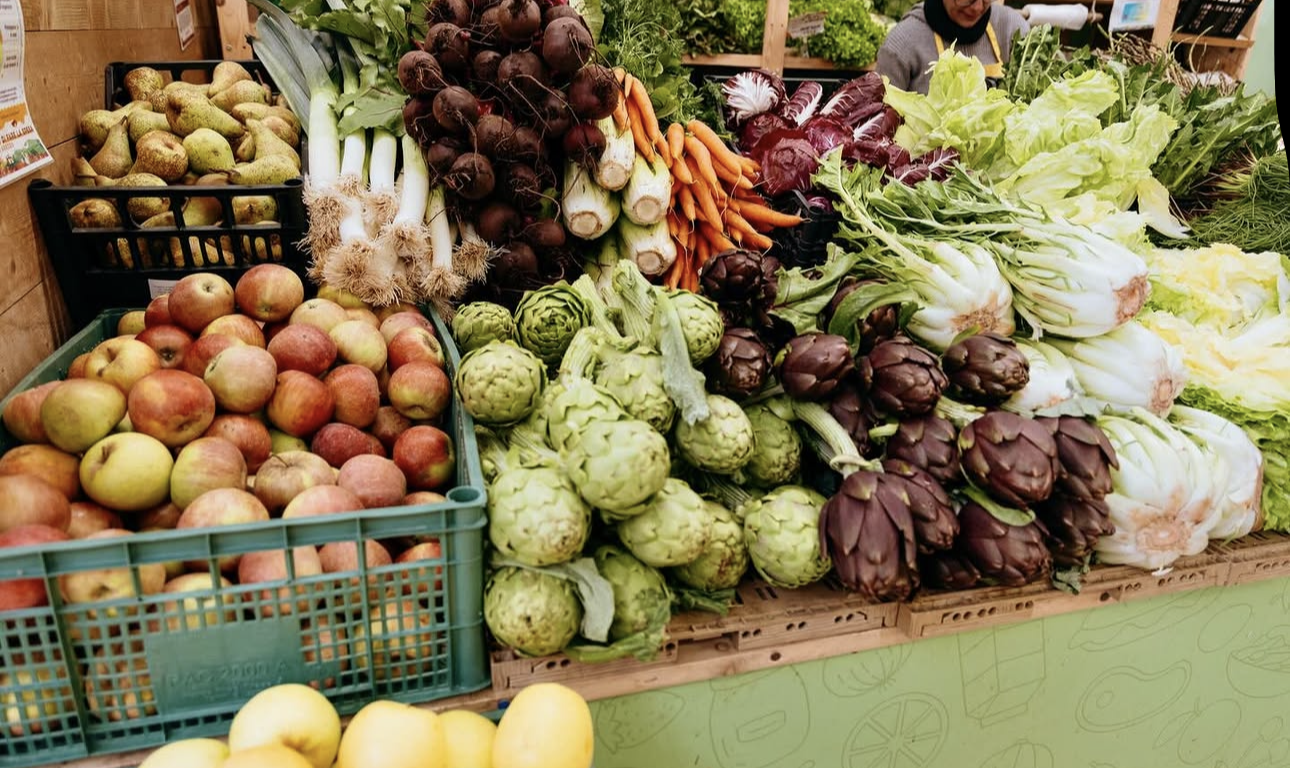
A Coldiretti market, where producers can sell their products directly to consumers.
Now, as I mentioned earlier, there are some things I wish I could bring home. Throughout my life, I have come to realize how important it is to advocate for agriculture. The beauty of Italian agriculture education is that it is taught in schools at a young age as its own subject, an equivalent of language arts or math. There is an emphasis on country-of-origin labeling; in Italy, there is a strong cultural focus on knowing where food comes from—something that shows up clearly in how products are labeled and marketed. In the United States, we import many of our products, especially when they are out of season. The avocados on your counter likely come from Mexico, the wine in your fridge is European, and the coffee in your cup is likely from South America. But when you go to Italy, you see the labels “Fatto in Italia” or “Made in Italy”. We met with Professor Emiliano Waas, and he explained how in Italian markets, you can see the seasons through the food, like how strawberries don’t appear until early summer and are only really sold then, because if they show up out of season, most people won’t buy them since they know those strawberries aren’t Italian. While the United States has a wide variety of climates and large swaths of land, agriculture is still dictated by the season. The growing seasons in Virginia and Alaska, or even California and Hawaii, are vastly different. In the United States, our food system is built around consistency and accessibility, making it possible for consumers to find a wide variety of products year-round, often at lower prices. Even with our variety of climates, this is not possible, so we import many food items. In Italy, they value and appreciate the seasonality of locally grown food. Both systems reflect what their consumers value most, whether that’s seasonality and local identity or availability and affordability.
Italy has its own agricultural challenges, just as we do in the United States. I believe that we should learn, exchange knowledge and practices, and that the world of agriculture would be better for everyone. If you ever get the opportunity to travel as I have, the Colosseum and the statue of David are amazing, but look at the farmlands; they are not only the beating soul of Italy but of the world.