
A Snapshot of Wild Horses in the United States and Beyond
By Kendra Young
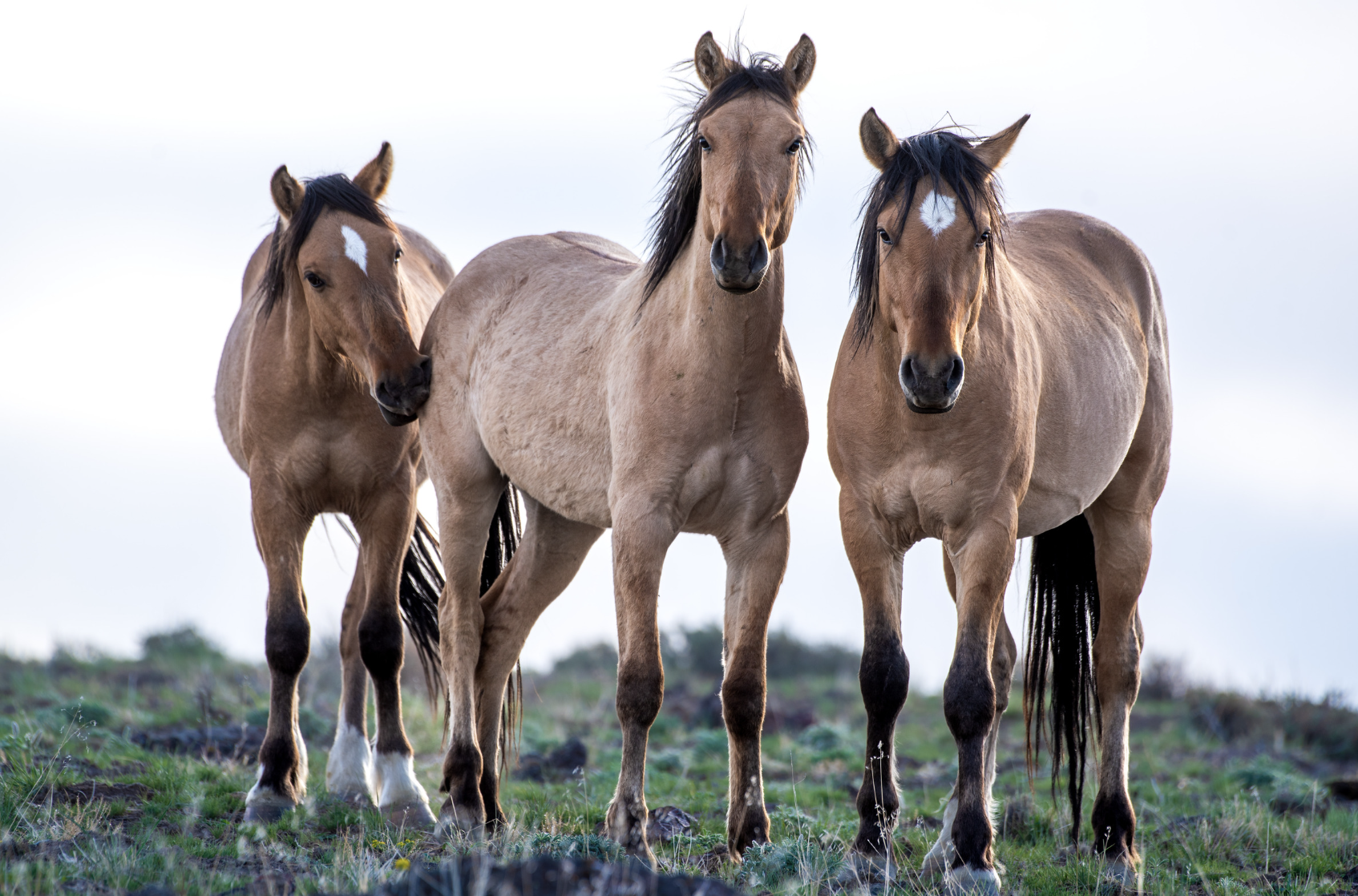
Mentioning the term “wild horse” in the western United States or in a grazing setting can bring about any number of reactions; some people might get defensive and say the horses belong here too, others might argue for their complete removal from rangelands, and some might even question the terminology – pointing out the exact differences between the definition of truly wild versus feral and what that means in terms of management decisions. To understand any one of these reactions, one must dive deeper into the world of wild horses.
The first set of questions include what is a true “wild” horse? What is the difference between wild versus feral horses in this context? Are there any truly wild horses left today? In short, a wild animal should imply an animal that lives out on the range with no assistance from humans to obtain life’s necessities such as food, water, or shelter; and a species that has never had assistance from or been tamed by humans. The terminology question comes from the second caveat of the general definition. Can a species be considered wild if in its past it was domesticated by humans, but eventually the line reverted back to their wild ways (the almost exact definition of feral)? Using this definition of surviving naturally and having never been domesticated, the only truly wild horse still in existence today is the Przewalski’s Horse (Equus ferus przewalskii). This endangered species is native to Mongolia, but has been reintroduced to other areas across Central Asia where it was once locally extinct. A brief history of the horses currently found in western North America includes a past ancestor species migrating to the continent across the Bering Land Bridge, that species then becomingly locally extinct, horses being brought back to the continent with explorers (like the Spanish Conquistadors), and ending with the herds seen today that are descendants of herds formed from animals that were turned loose or escaped captivity in the 1700’s, 1800’s, and even early 1900’s.
Wild, or feral, horses are found across the globe. Examples include Australian brumbies (Australia), Namib Desert horses (Namibia, Africa), Dartmoor ponies (English Moorlands), Misaki-uma horses (Japan), Camargue horses (France), Welsh Mountain ponies (Wales), Danube Delta horses (Romania), Pottoka ponies (Pyrenees Mountains of France and Spain’s Basque Country), Garrano and Sorraia horses (Portugal), and Sable Island horses (Canada), among others. Wild horses in America include the American mustang (western U.S.), Cumberland Island horses (Cumberland Island, Georgia), Grayson Highlands ponies (Grayson Highlands State Park, Virginia), Corolla wild horses (North Carolina’s Outer Banks), and even Chincoteague ponies (Assateague Island, Maryland and Virginia) made even more famous by Marguerite Henry’s book “Misty of Chincoteague.” There are countless horse herds across the world, more equine breeds that could be listed, and numerous geographies and locations to add to this list. Each type of horse or herd is managed, conserved, and/or ignored in a multitude of ways, under a multitude of organizations and entities.
The majority of wild horses in the western United States are found on federal lands and fall under the jurisdiction of the Bureau of Land Management (BLM) and the Wild and Free-Roaming Horses and Burros Act of 1971. The BLM administers its horse/ burro program in ten western states: Arizona, California, Colorado, Idaho, Montana, Nevada, New Mexico, Oregon, Utah, and Wyoming. Under the BLM’s jurisdiction, wild horses (and burros) can be found on two land classifications – Herd Areas (HA) and Herd Management Areas (HMA). By definition, Herd Management Areas are “Congressionally- designated areas of land to which specific laws and regulations pertaining to the management of wild horses and burros are applied. Management status can change based on changing conditions,” whereas a Herd Area was “designated in 1971 as places where wild horses and/or burros were found during the initial flights in 1971. Federal lands identified in 1971 but not managed for wild horses and burros are called Herd Areas,” (DOI-BLM N.D.). The BLM’s Herd Area and Herd Management Area Statistics, as of March 1, 2025, list a total of 73,130 animals (53,797 horses and 19,333 burros) on these landscapes (BLM 2025). The BLM Statistics (2025) also list the high level of the current appropriate management level (AML) as 25, 556 animals. Comparing 73,130 and 25,556, there is an abundance of wild horses and burros on the western landscape.
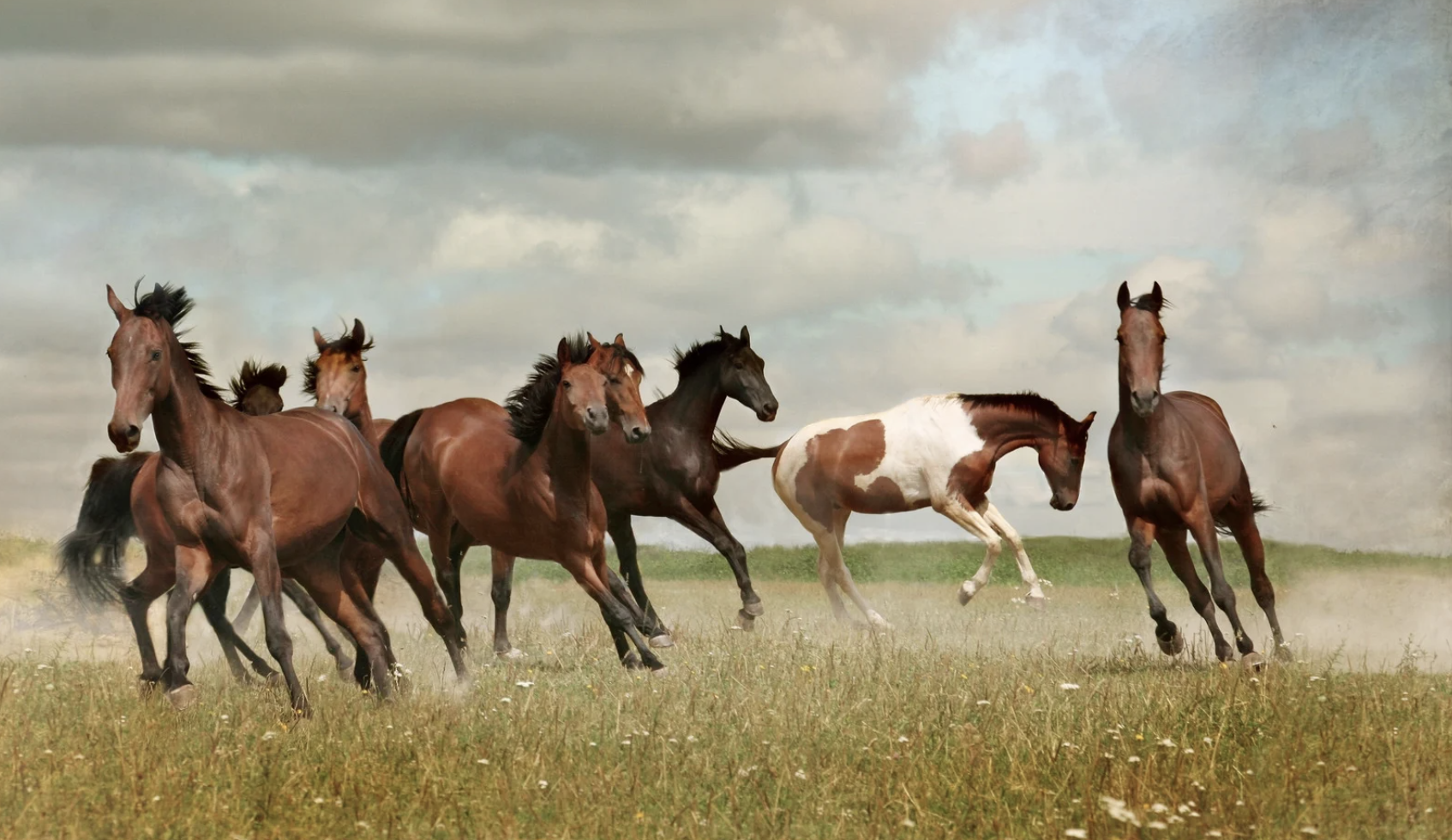
Wild, or feral, horses in the American West do not have any notable, natural predators, especially once they become adults. And unmanaged horse herds can double in size every four years, leading to rapid herd expansion (BLM FY 2025). For some, horses have the reputation as being a nuisance on the landscape – they are a dominant species and can outcompete other wildlife for necessary resources; over-populations of horses even compete with each other leading to starving equines; horses trample waterways, potentially causing water quality issues; over-grazing can lead to less native vegetation on the landscape, more invasive species, and more bare ground; and a large population can even become hazards in transportation regions or other human/ horse interfaces where horses are prevalent on the landscape. On grazing allotments, horses also compete with domestic livestock for grazing forage. In the deserts of the American Southwest, in areas with very limited resources, this competition can cause tension between wild horse advocates, wild horse managers, and local livestock producers. Proper management of the horses at appropriate levels leads to a multi-use ecosystem where all industries can survive and thrive.
American wild horse herds can be managed in several different ways. A gather is one example of a management tool. Large numbers of horses can be gathered by helicopter, or a smaller number can be gathered utilizing trap corrals and baiting animals in with something like hay. Once removed from a free-ranging population, wild horses can go to one of two places – they can be adopted by qualified individuals or placed in long-term, off-range holding facilities. Off-range holding facilities can have a corral set-up and look like a giant feedlot, or they can be off-range pastures, where the animals are allowed to freely graze in cultivated fields contracted into the program. The BLM cites that nearly 68,000 wild horses and burros are currently being cared for in off-range facilities, which includes almost 39,000 horses in off-range pastures. It also highlights over 6,600 horses were adopted in Fiscal Year 2024, (BLM FY2025).
Another example management concept to manage wild horse herd size is through artificially controlling the population growth potential. This can be done by injecting breeding-age mares with a contraceptive (Example: Porcine Zona Pellucida (PZP)), to inhibit pregnancies. This is still a relatively new or up-and-coming management tool. Mares are shot with an initial dosage dart from a long-range dart gun, then require regular (annual) follow-up dosages to assist in preventing individual pregnancies and thus large herd growth. Drug effectiveness, timing, and how to regularly get trained people in close proximity to horses are on-going research topics, and continuously being studied to rate project effectiveness.
Wild horses can be a controversial topic, especially in the grazing and resource management realms, but they are also a large part of the history of the American West. Managed at appropriate levels, wild horses and burros can be a part of a multi-use ecosystem. Wild horses can be found in a variety of regional and different geographies across the United States and the world. The management of each herd is as unique as they are. Wild horses are managed, conserved, or even seen as a nuisance to some, but there is no denying that seeing a wild horse thunder across the landscape into the sunset is a thrill for anyone.
Bureau of Land Management. (2025, March 1). Herd Area and Herd Management Area Statistics.
Bureau of Land Management. (Fiscal Year 2025). Wild Horse and Burro Program.
U.S. Department of the Interior, Bureau of Land Management. (n.d.) Wyoming Herd Management Areas.