
New World Screwworm: What Producers Need to Know
By: Addison Lindsey
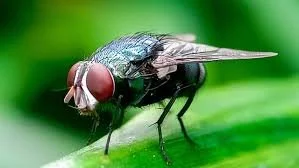
The New World Screwworm (NWS) is a destructive parasitic fly that threatens livestock, horses, wildlife, pets, and even humans. Unlike most fly larvae, which feed on dead or decaying tissue, screwworm larvae invade healthy, living tissue, causing severe wounds, secondary infections, and potentially death if left untreated.
Historically, the New World Screwworm has been found throughout parts of the Caribbean, Central America, and South America. After being eradicated from the United States decades ago, the parasite has steadily moved northward through Central America and Mexico. Recent detections in Texas and New Mexico have renewed concerns across the U.S. livestock industry and highlighted the importance of early detection and rapid response.
How Does the New World Screwworm Spread?
Female screwworm flies are attracted to open wounds and natural body openings, including the nose, mouth, eyes, ears, and genital areas. Even minor injuries, such as tick bites, branding wounds, castration sites, or scratches, can become sites for infestation.
A single female can lay 200 to 300 eggs at one time and as many as 3,000 eggs over her lifetime. Once the eggs hatch, the larvae immediately burrow into the wound and begin feeding on living tissue.
After approximately seven days, mature larvae leave the animal, drop to the ground, and pupate in the soil. Adult flies later emerge and continue the cycle.
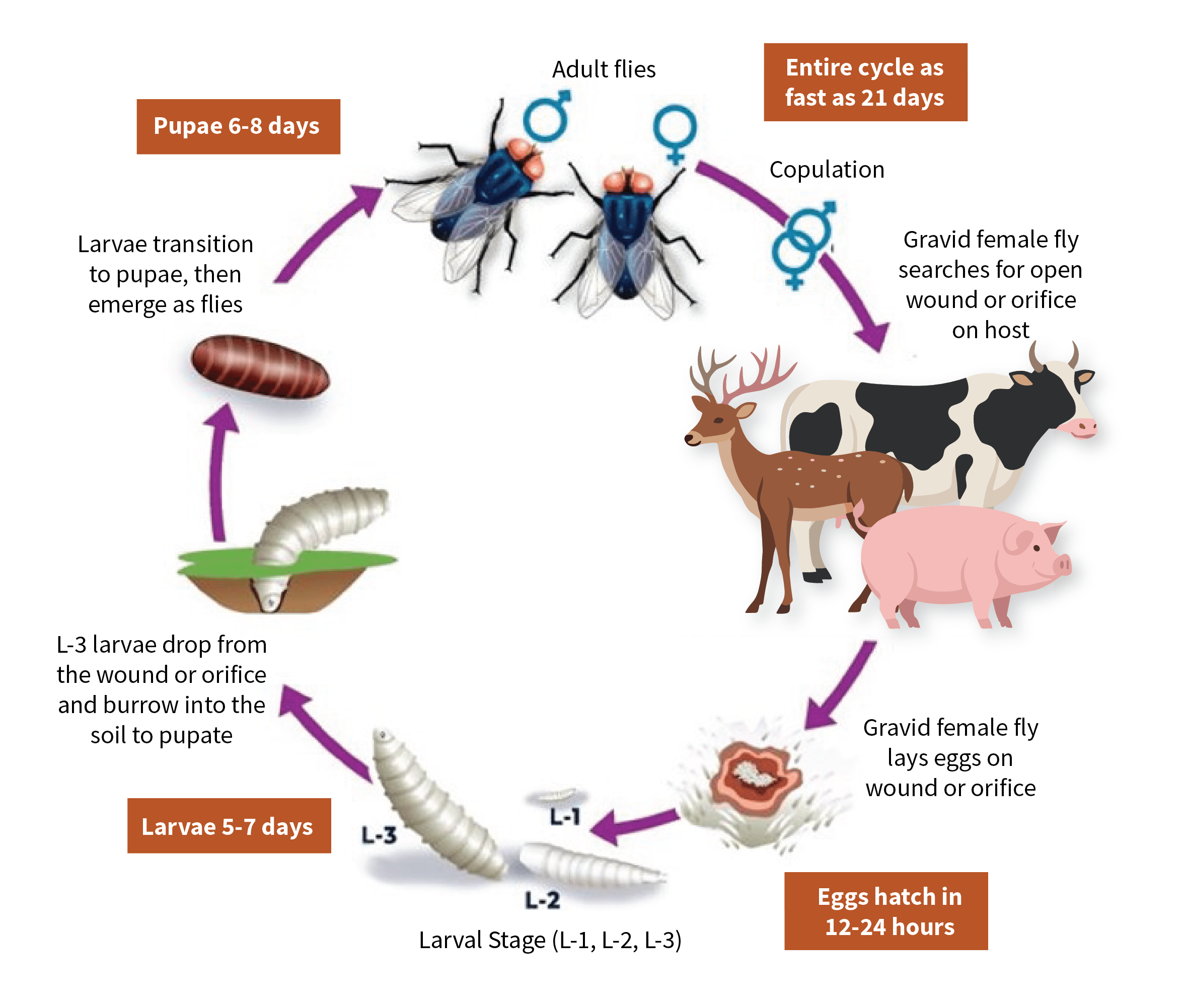
The Life Cycle of a New World Screwworm
The New World screwworm (Cochliomyia hominivorax) is native to the Americas and can complete its life cycle in as little as 21 days under warm conditions.
Egg Stage: Adult females mate only once during their lifetime and lay clusters of eggs along the edges of open wounds or natural body openings of warm-blooded animals.
Larval Stage: After hatching, the larvae burrow into healthy tissue and feed on living flesh. This stage causes the greatest damage, enlarging wounds and creating conditions for secondary infections. Without treatment, infestations can become severe and even fatal.
Pupal Stage: After several days of feeding, mature larvae leave the host animal, drop to the ground, and burrow into the soil, where they pupate for at least seven days.
Adult Stage: Adult flies emerge from the soil, mate, and restart the cycle. Adults are metallic blue-green, with three dark stripes on their backs and orange eyes. They are slightly larger than a common housefly and can travel considerable distances in search of suitable hosts.
A key challenge in controlling screwworm is that only the larval stage feeds on animals. By the time larvae are visible in a wound, the infestation is already underway, making early detection and prompt treatment critical.
How Can I Identify It?
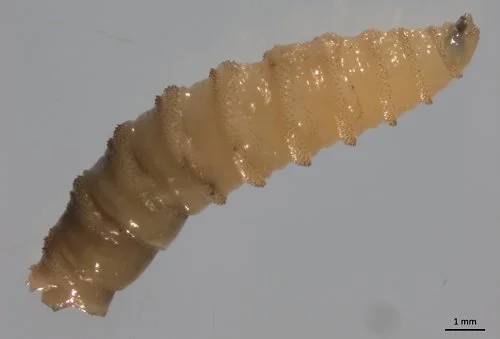
The screwworm gets its name from the way larvae burrow, or "screw," into living tissue. As they feed, wounds become larger and deeper, increasing the risk of infection and tissue loss.
One of the most distinctive signs of a screwworm infestation is a wound that appears to grow larger rather than heal. Infested wounds often have a foul odor and may contain numerous larvae feeding deep within the tissue.
Producers should routinely inspect animals and watch for:
Foul-smelling wounds containing maggots
Excessive licking, biting, or irritation around a wound
Lesions near navels, ears, branding sites, dehorning sites, or other injuries
Unusual restlessness, discomfort, or lethargy
Cream-colored larvae with visible bands of spines
The larval stage causes the greatest damage. Mature larvae can reach nearly two-thirds of an inch in length and have spiral bands of spines covering their bodies.
Because official identification requires specialized training, any suspected case should be reported to a veterinarian or animal health official for confirmation.
What's the Difference Between a Screwworm and a Botfly?
While both screwworms and botflies are fly larvae that can infest living animals, they behave very differently.
Screwworms are highly destructive parasites that feed on healthy, living tissue. Female flies lay eggs in open wounds, and the larvae burrow deeper into the flesh as they feed, causing severe tissue damage. A female screwworm fly can lay 200 to 300 eggs at one time and up to 3,000 eggs during her lifetime, allowing infestations to grow rapidly. If left untreated, infestations can be fatal.
Botflies, on the other hand, typically create a single, localized cyst beneath the skin. Their larvae feed within that pocket and generally do not destroy healthy surrounding tissue. Most botfly infestations are far less severe than screwworm infestations and usually involve only one or a few larvae.
The easiest way to remember the difference is that screwworms aggressively consume living tissue and expand wounds, while botflies usually remain confined to a single site and cause localized irritation.
Can It Be Prevented?
Prevention begins with good animal health management and careful monitoring for wounds.
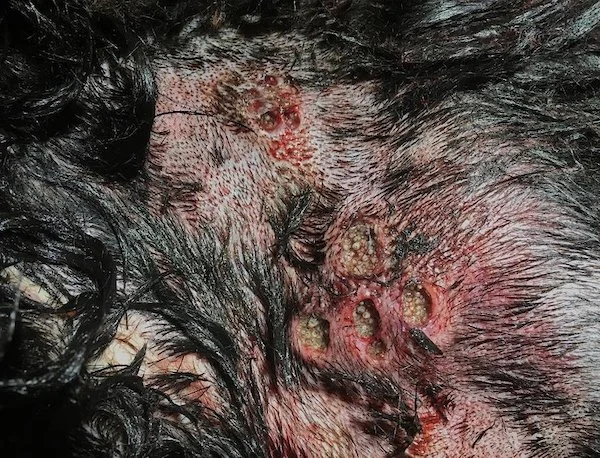
Dog infected by screwworm
Because New World Screwworm can infest livestock, horses, pets, wildlife, birds, and humans, preventing its introduction and spread remains the most effective defense.
Prevention Tips
Regularly inspect livestock, horses, and pets for wounds and signs of infestation.
Promptly treat open wounds and newborn umbilical cords with approved products.
Maintain effective parasite control programs to reduce tick and insect bites.
Remove or repair sharp objects in facilities, fencing, and equipment that could injure animals.
Ensure pets traveling internationally are properly inspected before returning to the United States.
What Should I Do If I Suspect New World Screwworm?
If you believe an animal may be infested:
· Contact your veterinarian immediately.
· Notify your state animal health official or animal health agency.
· Report suspected cases without delay.
· Continue monitoring nearby animals for signs of infestation.
Watch for:
The odor of infected or rotting tissue
Visible larvae in wounds
Wounds that fail to heal or continue growing
Animals showing unusual irritation or discomfort
Ongoing Prevention and Response Effort
The U.S. Food and Drug Administration's Center for Veterinary Medicine (CVM) is working alongside the U.S. Department of Agriculture (USDA), the Environmental Protection Agency (EPA), state animal health officials, and other federal agencies to monitor and respond to the threat of the New World Screwworm. These coordinated efforts focus on surveillance, prevention, rapid response, and protecting animal health across the United States.
Early detection and reporting remain some of the most important tools for limiting the spread of NWS.
How was the Screwworm Eradicated Before?
The eradication of the New World Screwworm is considered one of the greatest animal health successes in U.S. history.
Beginning in 1959, the United States and Mexico worked together to eliminate the pest using the Sterile Insect Technique (SIT). Scientists released sterile male flies that mated with wild females, producing infertile eggs. Since female screwworm flies typically mate only once, repeated releases gradually reduced populations until they were eliminated.
Livestock producers also played a major role by supporting research and eradication efforts.
Today, the USDA estimates the U.S. livestock industry benefits by more than $900 million annually because of screwworm eradication. The program improved animal health, reduced economic losses, and strengthened livestock industries throughout North and Central America.
The success of past eradication efforts demonstrates what can be accomplished through early detection, rapid reporting, producer vigilance, and coordinated action. As concerns about New World Screwworm continue to grow, these same principles remain essential for protecting livestock, wildlife, and rural communities.
Don’t miss our upcoming webinar on July 7, 2026 on Building Resilience in the Face of New World Screwworm: CLICK HERE to register!
References
https://www.nal.usda.gov/exhibits/speccoll/exhibits/show/stop-screwworms--selections-fr/introduction
https://agrilifeextension.tamu.edu/companion-animal-care-nws/
https://agrilifeextension.tamu.edu/new-world-screwworm
https://www.aphis.usda.gov/livestock-poultry-disease/cattle/ticks/screwworm