The Ingredients for a Successful Pasture Walk
by Troy Bishopp
In my opinion, the recipe for holding a successful pasture walk follows a familiar theme. To get folks off the farm, you need to tell’em (marketing), show’em (observation), and do some visiting. Loosely interpreted, the sentiment revolves around pasture, practitioners, pleasure and pie.
Albert Einstein said, “Creativity is intelligence having fun”. And for many, a pasture walk is a form of agri-entertainment with some learning attached or vice-versa.
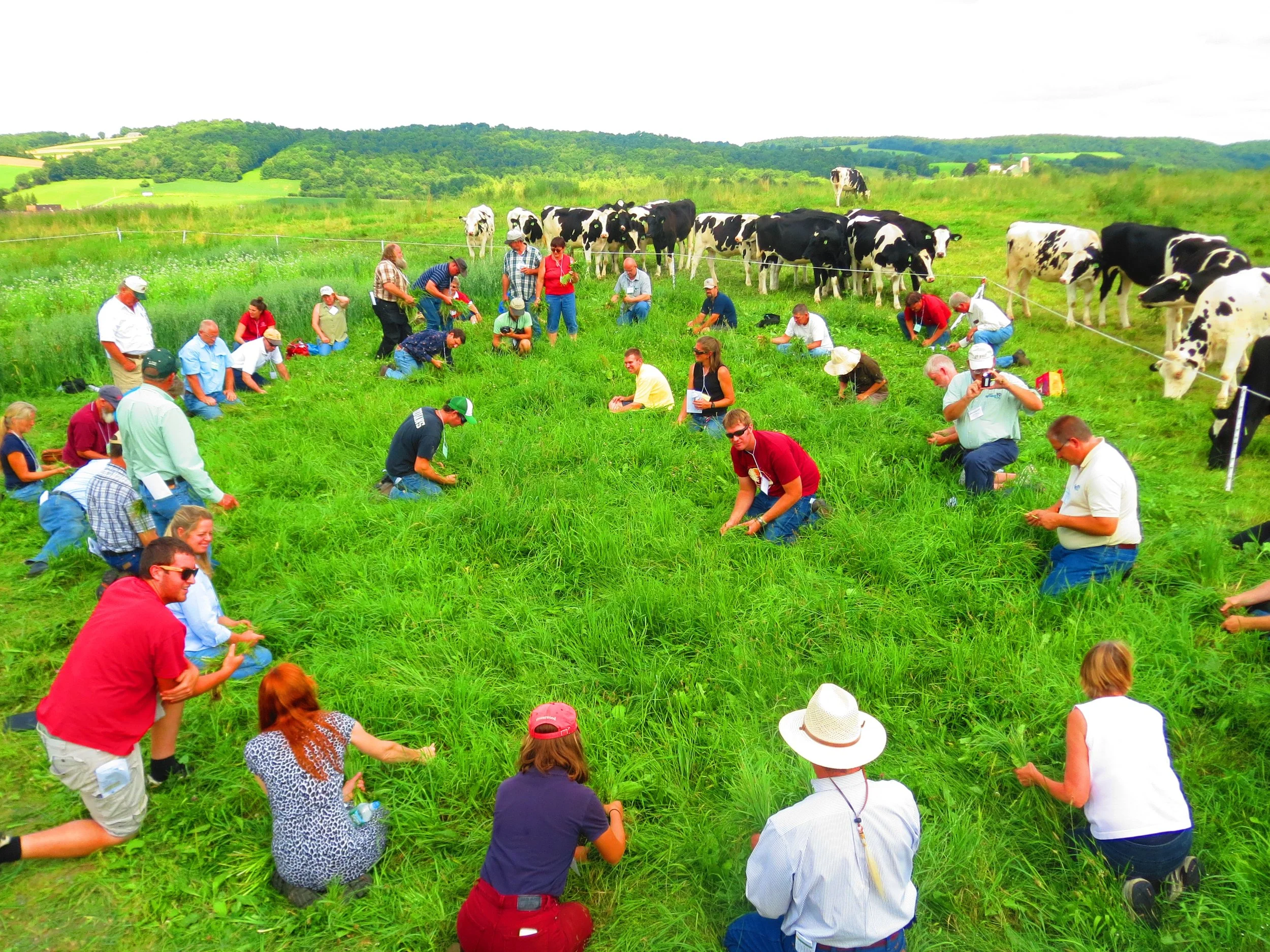
The first ingredients to enticing pasture walk goers are planning and creating an outreach buzz. As a grass/grazing facilitator, I consult with local farmer steering committees to brainstorm ideas, hot topics and activities. We do our level best to make the timing convenient for positive attendance and avoid months (June or the 1st part of July), when we are trying to make feed for winter. Typically, we have twilight meetings or Saturday morning get-togethers. We find an appropriate host and generally try to locate someone to lead the discussion who is considered “extra” knowledgeable because they live more than fifty miles away.
The easiest marketing to create is to just tell the prospective audience the specifics. Everything on a farm is interesting in my opinion. Anything can create a buzz. We once brought in Nebraska Farmer, Kevin Fulton, because he could talk about grazing management while also lifting an Amish buggy full of children and ripping a phonebook in half!
Other pasture-walk entertainers have focused on animal behavior, grounding, key-line design, measuring brix, identifying grass species, looking for dung beetles and reading the land, biologically. There are also host farmers who can be a colorful lot with their gateless fencing strategies, virtual fence collars, squirt gun medicine applicators, augmented float valves, clover seeding the backs of cows, fly trap ideas, bird house designs, and various pastured poultry pen configurations.
Holding a fruitful event requires understanding the complexities of pasture walk etiquette. You should put yourself in the guest’s mind. What’s in it for me? How will this help me at my own farm? What is my comfort zone? Can I ask questions without fear of reprisal? Will I meet some new friends?
It’s the job of the evening’s facilitator or team of organizers to make folks feel comfortable and introduce the host farm family, special guests, the goals for the event and to keep the conversation lively and feet moving because no one likes a standing-in-place pasture soliloquy. I’ve found it useful to stake out interesting things ahead of time in the pasture to converse over, especially a negative management consequence or stunning visual of a positive impact.
Most pasture groups I’ve led, like a little vigor and banter in the discussion and don’t necessarily like every topic neat and clean. Debate is perfectly fine in the “sanctuary of free thinkers” when it addresses the context of the operation’s goals and isn’t mean-spirited. Because everyone judges, it forces different perspectives, ideas and potential scenarios that can help other attendees. We’ve learned, “the hard way”, that the pasture experience should never be hijacked by the “You should context”.

There is a distinct phase when the children get restless with visions of goodies promised by parents for coming and walking through cow pies. This precipitates the most important part of any pasture party — the after party.
The call goes out to the wayward graziers to summon them in from their hike. They act pretty much like their ruminant buddies. There are the leaders, the in-betweeners and the followers. We’ve been doing this so long that we have developed an efficient food chain. I’m usually positioned to scoop the ice cream after they have collected their drink, brownie, or homemade donut (still warm from Mrs. Yoder’s kitchen) with one fitting dollop of hand-cranked heavenly goodness.
We deal with farmers’ appetites by the gallon. In fact, John Troyer gauged that a group of 70 probably couldn’t polish off his 6-gallon freezer of vanilla with a chaser of 10 dozen glazed donuts. We all underestimated how much sugar a bunch of farmers, kids and neighbors can consume over conversations and laughter. I’m guessing they would have enough residual sucrose for the next few days.
There has never been a twilight meeting I can recall that has not lasted until well past dark. I have heard folks exchanging phone numbers, e-mail addresses, suppliers and inviting newfound friends over for a visit. It’s satisfying to just stand there, listen and enjoy people making connections and telling stories. I’ll admit this recipe is really a social event disguised as an educational event.
Most in the agency/extension facilitator world get paralyzed in putting on workshops because of cost and how to pay for them. We are of the mindset to leverage our own (farmer) resources with those of a sponsoring organization like a NatGLC or state coalition. Most local meetings we put together are under 500 bucks. Our grazing groups share the cooking duties and we usually partner with a different sponsor every time. We also compensate the farm host for their time too.
We find no trouble getting sponsors because we are frugal with the resources and show tremendous positive results through media outlets, pictures and thank you letters.
This formula for successful, hands-on, fun and delicious pasture walks that create lasting knowledge and memories can be summed up by keeping the ingredients simple with a little pinch of farmer common sense. The approval rating comes when you see the anticipating smiles, hear the mmms, and discover there are no leftovers. You also see more people at future events because they’ve either participated or told others, which builds this sense of family, which is a great goal for a gathering of graziers celebrating the craft of good grazing.
In the words of Daniel Kline Jr. of Ingallside Meadows Farm,
“Pasture walks and homemade ice cream are a beautiful thing!!”